Everything about Knowledge
Awareness of facts, or competency

Knowledge is an awareness of facts, a familiarity with individuals and situations, or a practical skill. Descriptive knowledge, also called propositional knowledge, is often characterized as true belief that is distinct from opinion or guesswork by virtue of justification. While there is wide agreement among philosophers that propositional knowledge is a form of true belief, many controversies focus on justification. This includes questions like how to understand justification, whether it is needed at all, and whether something else besides it is needed. These controversies intensified in the latter half of the 20th century due to a series of thought experiments called Gettier cases that provoked alternative definitions. Wikipedia →
🧭 Start here: a 6-step reading path
- Read the overview: KnowledgeA 5-minute orientation
- Skim a recent paper: Large language models encode clinical knowledgeInfluential work since 2022
- Pick up a classic book: The Problems of PhilosophyThe most-reprinted book on the subject
- Read the landmark paper: Gene set enrichment analysis: A knowledge-based approach for interpreting genome-wide expression profilesCited 51,029 times
- Go sideways: EpistemologyA closely related topic
- Go sideways: Declarative knowledgeA closely related topic
📖 Definitions
Noun The fact of knowing about something; general understanding or familiarity with a subject, place, situation etc.
Noun Awareness of a particular fact or situation; a state of having been informed or made aware of something.
Noun Intellectual understanding; the state of appreciating truth or information.
Noun Familiarity or understanding of a particular skill, branch of learning etc.
🗂️ The subject at a glance
🏆 Landmark papers (most cited)
Gene set enrichment analysis: A knowledge-based approach for interpreting genome-wide expression profiles
Towards a Methodology for Developing Evidence‐Informed Management Knowledge by Means of Systematic Review
A Dynamic Theory of Organizational Knowledge Creation
Toward a knowledge‐based theory of the firm
Those Who Understand: Knowledge Growth in Teaching
Knowledge and Teaching:Foundations of the New Reform
Knowledge of the Firm, Combinative Capabilities, and the Replication of Technology
UniProt: a worldwide hub of protein knowledge
🆕 Influential since 2022
Large language models encode clinical knowledge
A Survey on Knowledge Graphs: Representation, Acquisition, and Applications
Water electrolysis: from textbook knowledge to the latest scientific strategies and industrial developments
How Does ChatGPT Perform on the United States Medical Licensing Examination (USMLE)? The Implications of Large Language Models for Medical Education and Knowledge Assessment
Unifying Large Language Models and Knowledge Graphs: A Roadmap
📚 Books worth reading
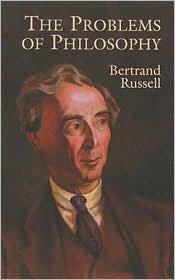 The Problems of PhilosophyBertrand Russell · 1900
 Essay concerning human understandingJohn Locke · 1689
 Discours de la méthodeRené Descartes · 1644
 ΘεαίτητοςPlato · 1861
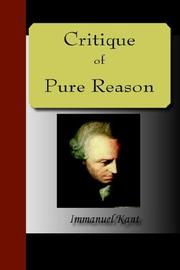 Kritik der reinen VernunftImmanuel Kant · 1781
 A System of Logic, Ratiocinative and InductiveJohn Stuart Mill, Jean Louis Hippolyte Peisse · 1843
 A treatise of human natureDavid Hume · 1739
 The advancement of learningFrancis Bacon · 1605
Ranked by number of editions on Open Library, a rough measure of how lasting a book is.
🔗 Related topics
- Epistemology Epistemology is the branch of philosophy that examines the nature, origin, and limits of knowledge. Also called the theory of knowledge, it explores different…
- Declarative knowledge Declarative knowledge, also known as theoretical knowledge, descriptive knowledge, propositional knowledge, and knowledge-that, is an awareness of facts…
- Philosophy Philosophy (from Ancient Greek φιλοσοφία (philosophía), lit. 'love of wisdom') is a systematic study of general and fundamental questions concerning topics…
- Reality Reality is the totality of existence or what all existing entities have in common. It is often contrasted with appearance, opposing what is with what seems…
- Truth Truth is commonly understood as conformity to reality or fact. It contrasts with falsity or misrepresentation that fails to align with the world. Truth…
- Outline of epistemology The following outline is provided as an overview of and topical guide to epistemology: Epistemology (a.k.a. theory of knowledge) – branch of philosophy…
- Justification (epistemology) Justification (also called epistemic justification) is a property of beliefs that fulfill certain norms about what a person should believe. Epistemologists…
- Definitions of knowledge Definitions of knowledge aim to identify the essential features of knowledge. Closely related terms are conception of knowledge, theory of knowledge, and…