Live briefing
Everything about Definitions of knowledge
Definitions of knowledge aim to identify the essential features of knowledge. Closely related terms are conception of knowledge, theory of knowledge, and analysis of knowledge. Some general features of knowledge are widely accepted among philosophers, for example, that it involves cognitive success and epistemic contact with reality. Despite extensive study, disagreements about the nature of knowledge persist, in part because researchers use diverging methodologies, seek definitions for distinct purposes, and have differing intuitions about the standards of knowledge. Wikipedia →
🧭 Start here: a 6-step reading path
- Read the overview: Definitions of knowledgeA 5-minute orientation
- Skim a recent paper: European Respiratory Society statement on preschool wheezing disorders: updated definitions, knowledge gaps and proposed future research directionsInfluential work since 2022
- Pick up a classic book: Posterior analyticsThe most-reprinted book on the subject
- Read the landmark paper: Definitions and properties of zero-knowledge proof systemsCited 480 times
- Go sideways: Gettier problemA closely related topic
- Go sideways: ReliabilismA closely related topic
📖 Definitions
No dictionary entry for this exact phrase.
🏆 Landmark papers (most cited)
Definitions and properties of zero-knowledge proof systems
Fostering integrity in research: Definitions, current knowledge, and future directions
Ethics of innovative surgery: US surgeons’ definitions, knowledge, and attitudes
Contributions of longitudinal studies to evolving definitions and knowledge of developmental dyscalculia
Information Systems Knowledge: Foundations, Definitions, and Applications
Research methods for design knowledge: clarifying definitions, characteristics, and areas of confusion
Extending Conceptual Definitions with Default Knowledge
Teachers’ beliefs about mathematical knowledge for teaching definitions
🆕 Influential since 2022
European Respiratory Society statement on preschool wheezing disorders: updated definitions, knowledge gaps and proposed future research directions
Identifying Knowledge and Process Gaps from a Systematic Literature Review of Net-Zero Definitions
MMLKG: Knowledge Graph for Mathematical Definitions, Statements and Proofs
A Reference Architecture for Supporting Multidimensional Big Data Analytics over Big Web Knowledge Bases: Definitions, Implementation, Case Studies
Lay Definitions of Intelligence, Knowledge, and Memory: Inter- and Independence of Constructs
📚 Books worth reading
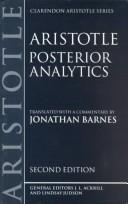 Posterior analyticsAristotle · 1901
 PhiloponusOwen Goldin, John Philoponus · 2012
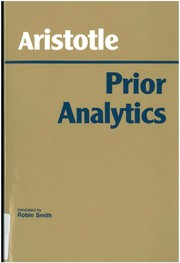 Prior AnalyticsAristotle · 1964
 PhiloponusJohn Philoponus · 1999
 Analytica prioraAristotle · 1545
- 📕Reality and the mindCelestine Nicholas Charles Bittle · 1936
 Interpreting Aristotle's Posterior analytics in late antiquity and beyondFrans A. J. de Haas, Mariska Leunissen · 2010
 Quaestiones super librum PosteriorumGualterus Burlaeus · 1982
Ranked by number of editions on Open Library, a rough measure of how lasting a book is.
🔗 Related topics
- Gettier problem In the field of epistemology, the Gettier problem is a landmark philosophical problem concerning the understanding of descriptive knowledge. Attributed…
- Reliabilism Reliabilism, a category of theories in the philosophical discipline of epistemology, has been advanced as a theory both of justification and of knowledge…
- Justification (epistemology) Justification (also called epistemic justification) is a property of beliefs that fulfill certain norms about what a person should believe. Epistemologists…
- Virtue epistemology Virtue epistemology is a philosophical approach to epistemology that stresses the importance of intellectual and specifically epistemic virtues. Virtue…
- Declarative knowledge Declarative knowledge, also known as theoretical knowledge, descriptive knowledge, propositional knowledge, and knowledge-that, is an awareness of facts…
- Epistemic closure Epistemic closure is a property of some belief systems and of many epistemic modal logics (viz. those which are "normal"). It is the principle that if…
- Epistemology Epistemology is the branch of philosophy that examines the nature, origin, and limits of knowledge. Also called the theory of knowledge, it explores different…
- Outline of epistemology The following outline is provided as an overview of and topical guide to epistemology: Epistemology (a.k.a. theory of knowledge) – branch of philosophy…