Live briefing
Everything about Join-calculus
The join-calculus is a process calculus developed at INRIA. The join-calculus was developed to provide a formal basis for the design of distributed programming languages, and therefore intentionally avoids communication constructs found in other process calculi, such as rendezvous communications, which are difficult to implement in a distributed setting. Despite this limitation, the join-calculus is as expressive as the full π-calculus. Encodings of the π-calculus in the join-calculus, and vice versa, have been demonstrated. Wikipedia →
🧭 Start here: a 6-step reading path
- Read the overview: Join-calculusA 5-minute orientation
- Pick up a classic book: Database system conceptsThe most-reprinted book on the subject
- Read the landmark paper: Inheritance in the join calculusCited 13 times
- Go sideways: Join-patternA closely related topic
- Go sideways: Concurrent computingA closely related topic
📖 Definitions
No dictionary entry for this exact phrase.
🗂️ The subject at a glance
🏆 Landmark papers (most cited)
Inheritance in the join calculus
Bisimulations in the join-calculus
DETERMINATION OF JOIN REGIONS BETWEEN CARBON NANOSTRUCTURES USING VARIATIONAL CALCULUS
Algebraic Pattern Matching in Join Calculus
Mapping the Join Calculus to Heterogeneous Hardware
Model checking processes specified in join-calculus algebra
An Operational Petri Net Semantics for the Join-Calculus
Determination of join regions between carbon nanostructures using variational calculus
📚 Books worth reading
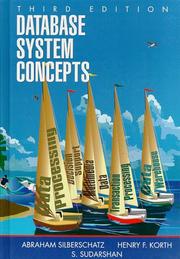 Database system conceptsAbraham Silberschatz · 1997
 Access database design & programmingSteven Roman · 1997
 Theory and Practice of ComputationShin-ya Nishizaki · 2013
 Incomplete data and data dependencies in relational databasesSergio Greco · 2012
 Fundamentals of physical design and query compilationDavid Toman · 2011
 Transactions on Large-Scale Data- and Knowledge-Centered Systems VIIAbdelkader Hameurlain · 2012
 Transactions on Petri Nets and Other Models of Concurrency VIKurt Jensen · 2012
 Database SystemsRamez Elmasri, Shamkant B. Navathe · 2010
Ranked by number of editions on Open Library, a rough measure of how lasting a book is.
🔗 Related topics
- Join-pattern Join-patterns provides a way to write concurrent, parallel and distributed computer programs by message passing. Compared to the use of threads and locks…
- Concurrent computing Concurrent computing is a form of computing in which several computations are executed concurrently—during overlapping time periods, instead of sequentially—wit…
- Session type In type theory, session types are used to ensure correctness in concurrent programs. They guarantee that messages sent and received between concurrent…
- List of concurrent and parallel programming languages This article lists concurrent and parallel programming languages, categorizing them by a defining paradigm. Concurrent and parallel programming languages…
- Actor model and process calculi In computer science, the Actor model and process calculi are two closely related approaches to the modelling of concurrent digital computation. See Actor…
- List of programming languages by type The notable programming languages listed here are grouped by their notable language attribute. As a language can have multiple attributes, the same language…
- Π-calculus In theoretical computer science, the π-calculus (or pi-calculus) is a process calculus. The π-calculus allows channel names to be communicated along the…
- Process calculus In computer science, the process calculi (or process algebras) are a diverse family of related approaches for formally modelling concurrent systems. Process…