Live briefing
Everything about Concurrent computing
Executing several computations during overlapping time periods
Concurrent computing is a form of computing in which several computations are executed concurrently—during overlapping time periods, instead of sequentially—with one completing before the next starts. Wikipedia →
🧭 Start here: a 6-step reading path
- Read the overview: Concurrent computingA 5-minute orientation
- Skim a recent paper: Decentralized Scheduling for Concurrent Tasks in Mobile Edge Computing via Deep Reinforcement LearningInfluential work since 2022
- Pick up a classic book: DogfightThe most-reprinted book on the subject
- Read the landmark paper: Highly concurrent computing structures for matrix arithmetic and signal processingCited 210 times
- Go sideways: Parallel programming modelA closely related topic
- Go sideways: Data parallelismA closely related topic
📖 Definitions
No dictionary entry for this exact phrase.
🏆 Landmark papers (most cited)
Highly concurrent computing structures for matrix arithmetic and signal processing
The PVM concurrent computing system: Evolution, experiences, and trends
Fault-tolerant matrix arithmetic and signal processing on highly concurrent computing structures
Network‐based concurrent computing on the PVM system
Resource Allocation in IoT Edge Computing via Concurrent Federated Reinforcement Learning
Concurrent Subspace Optimization Using Design Variable Sharing in a Distributed Computing Environment
Abstraction and modularity mechanisms for concurrent computing
Delay-aware concurrent data management method for IoT collaborative mobile edge computing environment
🆕 Influential since 2022
Decentralized Scheduling for Concurrent Tasks in Mobile Edge Computing via Deep Reinforcement Learning
Computing hemodynamic response functions from concurrent spectral fiber-photometry and fMRI data
Communication-Dependent Computing Resource Management for Concurrent Task Orchestration in IoT Systems
Transactional Services for Concurrent Mobile Agents over Edge/Cloud Computing-Assisted Social Internet of Things
Association between different sensory modalities based on concurrent time series data obtained by a collaborative reservoir computing model
📚 Books worth reading
 DogfightFred Vogelstein · 2013
 World War 3.0Ken Auletta · 2001
- 📕Bi-Level Integrated System Synthesis (BLISS)Jaroslaw Sobieszczanski-Sobieski · 1998
- 📕Strategies for concurrent processing of complex algorithms in data driven architecturesJohn W. Stoughton · 1987
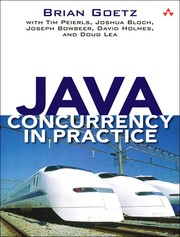 Java Concurrency in PracticeBrian Goetz, Joshua Bloch · 2006
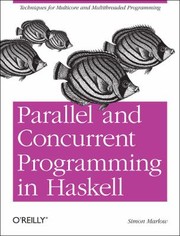 Parallel And Concurrent Programming In HaskellSimon Marlow · 2013
 Concurrent systemsJean Bacon, J. Bacon · 1993
 I-DEAS Student GuideSDRC · 2001
Ranked by number of editions on Open Library, a rough measure of how lasting a book is.
🔗 Related topics
- Parallel programming model In computing, a parallel programming model is an abstraction of parallel computer architecture, with which it is convenient to express algorithms and their…
- Data parallelism Data parallelism is parallelization across multiple processors in parallel computing environments. It focuses on distributing the data across different…
- Parallel computing Parallel computing is a type of computation in which many calculations or processes are carried out simultaneously. Large problems can often be divided…
- Task parallelism Task parallelism (also known as function parallelism and control parallelism) is a form of parallelization of computer code across multiple processors…
- Automatic parallelization Automatic parallelization, also auto-parallelization or autoparallelization, is a compiler optimization in which a compiler or other software tool transforms…
- Distributed computing Distributed computing is a field of computer science that studies distributed systems, defined as computer systems whose inter-communicating components…
- Single program, multiple data In computing, single program, multiple data (SPMD) is a term that has been used to refer to computational models for exploiting parallelism whereby multiple…
- Join-pattern Join-patterns provides a way to write concurrent, parallel and distributed computer programs by message passing. Compared to the use of threads and locks…