Live briefing
Everything about Distributed computing
System with multiple networked computers
Distributed computing is a field of computer science that studies distributed systems, defined as computer systems whose inter-communicating components are located on different networked computers. Wikipedia →
🧭 Start here: a 6-step reading path
- Read the overview: Distributed computingA 5-minute orientation
- Skim a recent paper: Edge Learning for B5G Networks With Distributed Signal Processing: Semantic Communication, Edge Computing, and Wireless SensingInfluential work since 2022
- Pick up a classic book: Advances in Computers, Volume 49 (Advances in Computers)The most-reprinted book on the subject
- Read the landmark paper: Efficient distributed quantum computingCited 185 times
- Go sideways: Parallel computingA closely related topic
- Go sideways: Theoretical computer scienceA closely related topic
📖 Definitions
Noun The process of aggregating the power of several computers to collaboratively run a single computational task in a transparent and coherent way.
Noun The use of the idle time of large numbers of networked computers to work on projects too large for any single group.
🏆 Landmark papers (most cited)
Efficient distributed quantum computing
Computing with distributed chaos
Distributed quantum computing
Distributed Computing Economics
Wireless MapReduce Distributed Computing
Distributed computing research issues in grid computing
Distributed Cloud Computing
Resilient Distributed Computing
🆕 Influential since 2022
Edge Learning for B5G Networks With Distributed Signal Processing: Semantic Communication, Edge Computing, and Wireless Sensing
Distributed Artificial Intelligence Empowered by End-Edge-Cloud Computing: A Survey
Distributed quantum computing: A survey
On Distributed Computing Continuum Systems
Optimized Compiler for Distributed Quantum Computing
📚 Books worth reading
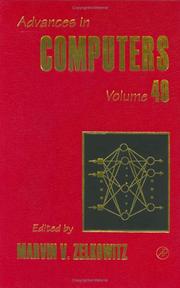 Advances in Computers, Volume 49 (Advances in Computers)Marvin V. Zelkowitz, Marshall C. Yovits · 1995
 Cooperative Design, Visualization, and EngineeringYuhua Luo · 2004
 PatternsIBM Redbooks · 2002
 Active DirectoryRobbie Allen, Joe Richards · 2003
 Security EngineeringRoss J. Anderson · 2001
 Distributed SystemsSukumar Ghosh · 2006
 HadoopTom White, Tom White · 2009
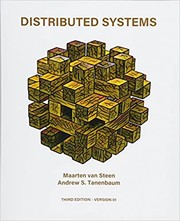 Distributed SystemsAndrew S. Tanenbaum, Maarten Van Steen · 2001
Ranked by number of editions on Open Library, a rough measure of how lasting a book is.
🔗 Related topics
- Parallel computing Parallel computing is a type of computation in which many calculations or processes are carried out simultaneously. Large problems can often be divided…
- Theoretical computer science Theoretical computer science is a subfield of computer science and mathematics that focuses on the abstract and mathematical foundations of computation…
- Concurrent computing Concurrent computing is a form of computing in which several computations are executed concurrently—during overlapping time periods, instead of sequentially—wit…
- Computer cluster A computer cluster is a group of autonomous computers that work together so that they can be viewed as a single system. Unlike grid computers, computer…
- Data-intensive computing Data-intensive computing is a class of parallel computing applications which use a data parallel approach to process large volumes of data typically terabytes…
- Graph (abstract data type) In computer science, a graph is an abstract data type that is meant to implement the undirected graph and directed graph concepts from the field of graph…
- Leslie Valiant Leslie Gabriel Valiant FRS (born 28 March 1949) is a British-American computer scientist and computational theorist. He was born to a chemical engineer…
- Parallel algorithm In computer science, a parallel algorithm, as opposed to a traditional serial algorithm, is an algorithm which can do multiple operations in a given time…