Live briefing
Everything about Innatism
Belief that the human mind is born with knowledge
In the philosophy of mind, innatism is the view that the mind is born with already-formed ideas, knowledge, and beliefs. The opposing doctrine, that the mind is a tabula rasa at birth and all knowledge is gained from experience and the senses, is called empiricism. Wikipedia →
🧭 Start here: a 6-step reading path
- Read the overview: InnatismA 5-minute orientation
- Skim a recent paper: Under- and Overspecification in Moral Foundation Theory. The Problematic Search for a Moderate Version of InnatismInfluential work since 2022
- Pick up a classic book: Innate immune system of skin and oral mucosaThe most-reprinted book on the subject
- Read the landmark paper: On innatism: a response to HogensonCited 6 times
- Go sideways: RationalismA closely related topic
- Go sideways: An Essay Concerning Human UnderstandingA closely related topic
📖 Definitions
Noun The view that the mind is born with certain ideas or knowledge, as opposed to the idea of the "blank slate" or tabula rasa.
🗂️ The subject at a glance
🏆 Landmark papers (most cited)
On innatism: a response to Hogenson
Innatism and the Stoa
Theology, Innatism, and the Epicurean Self
The historical possibility and necessity of (Ilyenkov’s) anti-innatism
Innatism, Concept Formation, Concept Mastery and Formal Education
Moral innatism, connatural ideas, and impuissance in daily affairs: James Q. Wilson's acrobatic dive into an empty pool
John Calvin and John Locke on the Sensus Divinitatis and Innatism
Innatism in the Anthropology of A. L. Kroeber: A Critique of ‘the Boasian Paradigm’
🆕 Influential since 2022
Under- and Overspecification in Moral Foundation Theory. The Problematic Search for a Moderate Version of Innatism
The Religious Innatism Debate in Early Modern Britain: Intellectual Change Beyond Locke
The religious innatism debate in early modern Britain: intellectual change beyond Locke The religious innatism debate in early modern Britain: intellectual change beyond Locke , by Robin Mills. London - New York, Palgrave Macmillan, 2021, ix + 132 pp., £55 (Hardback), ISBN 978-3-030-84322-9
: The Religious Innatism Debate in Early Modern Britain: Intellectual Change Beyond Locke
Response to Manekin: Reading Aristotle through Gersonides: Innatism, Scepticism, and Empiricism
📚 Books worth reading
 Innate immune system of skin and oral mucosaNava Dayan · 2011
 Antimicrobial Peptides And Innate ImmunityPieter S. Hiemstra · 2013
 Nucleic acids in innate immunityKen J. Ishii · 2008
 Descartes on innate ideasDeborah A. Boyle · 2009
- 📕Autophagy, Infection, and the Immune ResponseWilliam T. Jackson, Michele S. Swanson · 2014
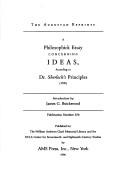 A Philosophic Essay Concerning Ideas, According to Dr. Sherlock's PrinciplesJames G. Buickerood · 1993
 Good Germs, Bad GermsJessica Snyder Sachs · 2007
 Infection and the compromised hostJames Crawford Allen · 1976
Ranked by number of editions on Open Library, a rough measure of how lasting a book is.
🔗 Related topics
- Rationalism In philosophy, rationalism is the epistemological view that "regards reason as the chief source and test of knowledge" or "the position that reason has…
- An Essay Concerning Human Understanding An Essay Concerning Human Understanding is an essay by John Locke concerning the foundation of human knowledge and understanding. It first appeared in…
- Tabula rasa Tabula rasa (/ˈtæb.(j)ə.lə ˈrɑː.sə, -.zə, ˈreɪ.-/; Latin for "blank slate") is the idea of individuals being born empty of any built-in mental content…
- Empiricism Empiricism is an epistemological view in philosophy which holds that true knowledge or justification comes either only or primarily from sensory experience…
- Psychological nativism In the field of psychology, nativism is the view that certain skills or abilities are "native" or hard-wired into the brain at birth. This is in contrast…
- Cartesian Linguistics Cartesian Linguistics: A Chapter in the History of Rationalist Thought is a 1966 book by Noam Chomsky. Chomsky coined term Cartesian linguistics in the…
- Idea An idea (from the Greek word: ἰδέα (idea), meaning 'a form, or a pattern') is the result of thought. Although the word is used in common usage, in philosophy…
- Modern philosophy Modern philosophy is philosophy developed in the modern era and associated with modernity. It is not a specific doctrine or school (and thus should not…