Live briefing
Everything about In-place algorithm
Type of computer science algorithm
In computer science, an in-place algorithm is an algorithm that operates directly on the input data structure without requiring extra space proportional to the input size. In other words, it modifies the input in place, without creating a separate copy of the data structure. An algorithm which is not in-place is sometimes called not-in-place or out-of-place. Wikipedia →
🧭 Start here: a 6-step reading path
- Read the overview: In-place algorithmA 5-minute orientation
- Skim a recent paper: A Novel Sampling-Based Optimal Motion Planning Algorithm for Energy-Efficient Robotic Pick and PlaceInfluential work since 2022
- Pick up a classic book: Discrete and combinatorial mathematicsThe most-reprinted book on the subject
- Read the landmark paper: A new reliability-oriented place and route algorithm for SRAM-based FPGAsCited 137 times
- Go sideways: QuicksortA closely related topic
- Go sideways: Insertion sortA closely related topic
📖 Definitions
No dictionary entry for this exact phrase.
🗂️ The subject at a glance
🏆 Landmark papers (most cited)
A new reliability-oriented place and route algorithm for SRAM-based FPGAs
An in-place, in-order prime factor FFT algorithm
Implementation of a self-sorting in-place prime factor FFT algorithm
Self-sorting in-place FFT algorithm with minimum working space
Karmarkar’s algorithm and its place in applied mathematics
HI-FFT: Heterogeneous Parallel In-Place Algorithm for Large-Scale 2D-FFT
A DISTRIBUTED ALGORITHM FOR ON-LINE DIAGNOSIS OF PLACE-BORDERED PETRI NETS
Algorithm 467: matrix transposition in place [F1]
🆕 Influential since 2022
A Novel Sampling-Based Optimal Motion Planning Algorithm for Energy-Efficient Robotic Pick and Place
Efficient In-Place Hough Transform Algorithm for Arbitrary Image Sizes
The Task Decomposition and Dedicated Reward-System-Based Reinforcement Learning Algorithm for Pick-and-Place
Visual Servo Algorithm Of Robot Arm For Pick And Place Application
Efficient Underground Tunnel Place Recognition Algorithm Based on Farthest Point Subsampling and Dual-Attention Transformer
📚 Books worth reading
 Discrete and combinatorial mathematicsRalph P. Grimaldi · 1985
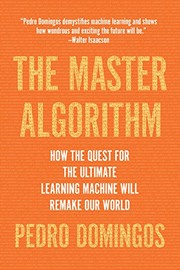 The Master AlgorithmPedro Domingos · 2015
 Eureka mathGordon A. Cain Center · 2015
 Is the universe a hologram?Adolfo Plasencia, Tim O'Reilly · 2017
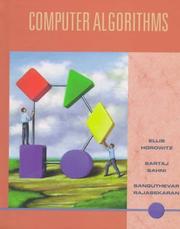 Computer algorithmsEllis Horowitz · 1997
 Data structures and algorithms in JavaAdam Drozdek · 2001
 24/7Robert Hassan, Ronald E. Purser · 2007
 Algorithm designMichael T. Goodrich, Roberto Tamassia · 2001
Ranked by number of editions on Open Library, a rough measure of how lasting a book is.
🔗 Related topics
- Quicksort Quicksort is an efficient, general-purpose sorting algorithm. Quicksort was developed by British computer scientist Tony Hoare in 1959 and published in…
- Insertion sort Insertion sort is a simple sorting algorithm that builds the final sorted array (or list) one item at a time by comparisons. It is much less efficient…
- Merge sort Merge sort (also commonly spelled as mergesort or merge-sort) is an efficient, general-purpose, comparison-based sorting algorithm. Most implementations…
- Sorting algorithm In computer science, a sorting algorithm is an algorithm that puts elements of a list into an order. The most frequently used orders are numerical order…
- Heapsort In computer science, heapsort is an efficient, comparison-based sorting algorithm that reorganizes an input array into a heap (a data structure where each…
- Partial sorting In computer science, partial sorting is a relaxed variant of the sorting problem. Total sorting is the problem of returning a list of items such that its…
- Patience sorting In computer science, patience sorting is a sorting algorithm inspired by, and named after, the card game patience. A variant of the algorithm efficiently…
- Radix sort In computer science, radix sort is a non-comparative sorting algorithm. It avoids comparison by creating and distributing elements into buckets according…