Everything about Insertion sort
Sorting algorithm

Insertion sort is a simple sorting algorithm that builds the final sorted array (or list) one item at a time by comparisons. It is much less efficient on large lists than more advanced algorithms such as quicksort, heapsort, or merge sort. However, insertion sort provides several advantages:Simple implementation: Jon Bentley shows a version that is three lines in C-like pseudo-code, and five lines when optimized. Efficient for (quite) small data sets, much like other quadratic (i.e., O(n2)) sorting algorithms May be more efficient in practice than most other simple quadratic algorithms such as selection sort or bubble sort – but relative incoming data order and read/write costs matter – with high exchange costs and randomly ordered data, selection sort is faster Adaptive, i.e., efficient for data sets that are already substantially sorted: the time complexity is O(kn) when each element in the input is no more than k places away from its sorted position Stable; i.e., does not change the relative order of elements with equal keys In-place; i.e., only requires a constant amount O(1) of additional memory space Online; i.e., can sort a list as it receives it Wikipedia →
🧭 Start here: a 6-step reading path
- Read the overview: Insertion sortA 5-minute orientation
- Skim a recent paper: Using Artificial Immune Systems to Sort and Shim Insertion Devices at Diamond Light SourceInfluential work since 2022
- Pick up a classic book: The art of cookery, made plain and easyThe most-reprinted book on the subject
- Read the landmark paper: Insertion Sort is O(n log n)Cited 45 times
- Go sideways: Selection sortA closely related topic
- Go sideways: K-way merge algorithmA closely related topic
📖 Definitions
Noun A sorting algorithm that performs its task by inserting new items into a pre-existing sorted data structure.
🗂️ The subject at a glance
🏆 Landmark papers (most cited)
Insertion Sort is O(n log n)
A generative model for rank data based on insertion sort algorithm
An Enhanced Bidirectional Insertion Sort Over Classical Insertion Sort
Bidirectional Conditional Insertion Sort algorithm; An efficient progress on the classical insertion sort
SORT maneuver for nasogastric tube insertion
A note of the higher moments of the expected behavior of straight insertion sort
Brownian Motus and Clustered Binary Insertion Sort methods: An efficient progress over traditional methods
Nasogastric tube insertion easily done: The SORT maneuver
🆕 Influential since 2022
Using Artificial Immune Systems to Sort and Shim Insertion Devices at Diamond Light Source
Inserge-Sort: rewriting Insertion-Sort
Analisis Kinerja Algoritma Bubble Sort, Selection Sort, dan Insertion Sort Menggunakan Python pada Data Mahasiswa
Implementation of Sorting Algorithm in Marketplace to Sort Price Using Insertion Sort
Perbandingan Kinerja Algoritma Bubble Sort dan Insertion Sort dalam Pengurutan Data Penjualan UMKM
📚 Books worth reading
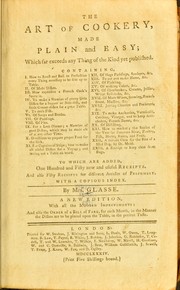 The art of cookery, made plain and easyHannah Glasse · 1747
 The experienced English housekeeperElizabeth Raffald · 1769
 Java software solutionsLewis, John, John E. Lewis Ph. D. · 1997
 C How to ProgramPaul J. Deitel, Harvey M. Deitel · 2007
 The parson's counsellorDegge, Simon Sir · 1676
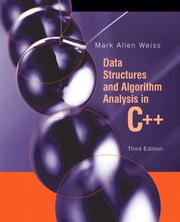 Data structures and algorithm analysis in CMark Allen Weiss · 1993
 Sams teach yourself SQL in 10 minutesBen Forta · 1999
 Data structures & algorithm analysis in JavaMark Allen Weiss · 1999
Ranked by number of editions on Open Library, a rough measure of how lasting a book is.
🔗 Related topics
- Selection sort In computer science, selection sort is an in-place comparison sorting algorithm. It has a O(n2) time complexity, which makes it inefficient on large lists…
- K-way merge algorithm In computer science, k-way merge algorithms or multiway merges are a specific type of sequence merge algorithms that specialize in taking in k sorted lists…
- Library sort Library sort or gapped insertion sort is a sorting algorithm that uses an insertion sort, but with gaps in the array to accelerate subsequent insertions…
- Heap (data structure) In computer science, a heap is a tree-based data structure that satisfies the heap property: In a max heap, for any given node C, if P is the parent node…
- Bucket sort Bucket sort, or bin sort, is a sorting algorithm that works by distributing the elements of an array into a number of buckets. Each bucket is then sorted…
- Merge algorithm Merge algorithms are a family of algorithms that take multiple sorted lists as input and produce a single list as output, containing all the elements of…
- Quicksort Quicksort is an efficient, general-purpose sorting algorithm. Quicksort was developed by British computer scientist Tony Hoare in 1959 and published in…
- Binary heap A binary heap is a heap data structure that takes the form of a binary tree. Binary heaps are a common way of implementing priority queues. The binary…