Everything about Hyperoperation
Generalization of addition, multiplication, exponentiation, tetration, etc.
In mathematics, the hyperoperation sequence is an infinite sequence of arithmetic operations that starts with a unary operation. The sequence continues with the binary operations of addition, multiplication, and exponentiation. After that, the sequence proceeds with further binary operations extending beyond exponentiation, using right-associativity. For the operations beyond exponentiation, the n-th member of this sequence is named by Reuben Goodstein after the Greek prefix of n suffixed with -ation and can be written using n − 2 arrows in Knuth's up-arrow notation. Each hyperoperation may be understood recursively in terms of the previous one by: Wikipedia →
🧭 Start here: a 6-step reading path
- Read the overview: HyperoperationA 5-minute orientation
- Pick up a classic book: HypernullarionThe most-reprinted book on the subject
- Read the landmark paper: Some remarks on congruences obtained from the L-fuzzy Nakano hyperoperationCited 6 times
- Go sideways: TetrationA closely related topic
- Go sideways: Ackermann functionA closely related topic
📖 Definitions
Noun One of a sequence of operations for compounding numbers that increase in growth iteratively.
🏆 Landmark papers (most cited)
📚 Books worth reading
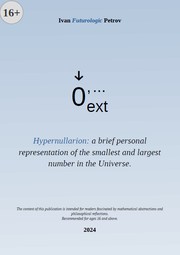 HypernullarionIvan Futurologic Petrov · 2024
Ranked by number of editions on Open Library, a rough measure of how lasting a book is.
🔗 Related topics
- Tetration In mathematics, tetration (or hyper-4) is an operation based on iterated, or repeated, exponentiation. There is no universal notation for tetration, though…
- Ackermann function In computability theory, the Ackermann function, named after Wilhelm Ackermann, is one of the simplest and earliest-discovered examples of a total computable…
- Knuth's up-arrow notation In mathematics, Knuth's up-arrow notation is a method of notation for very large integers, introduced by Donald Knuth in 1976. In his 1947 paper, R. L…
- Primitive recursive function In computability theory, a primitive recursive function is, roughly speaking, a function that can be computed by a computer program whose loops are all…
- Primitive recursive arithmetic Primitive recursive arithmetic (PRA) is a quantifier-free formalization of the natural numbers. It was first proposed by Norwegian mathematician Skolem…
- Successor function In mathematics, the successor function or successor operation sends a natural number to the next one. The successor function is denoted by S {\displaystyle…
- Grzegorczyk hierarchy The Grzegorczyk hierarchy (/ɡrɛˈɡɔːrtʃək/, Polish pronunciation: [ɡʐɛˈɡɔrt͡ʂɨk]), named after the Polish logician Andrzej Grzegorczyk, is a hierarchy of…
- Course-of-values recursion In computability theory, course-of-values recursion is a technique for defining number-theoretic functions by recursion. In a definition of a function…