Live briefing
Everything about Human performance modeling
Human research factorization and quantification system
Human performance modeling (HPM) is a method of quantifying human behavior, cognition, and processes. It is a tool used by human factors researchers and practitioners for both the analysis of human function and for the development of systems designed for optimal user experience and interaction. It is a complementary approach to other usability testing methods for evaluating the impact of interface features on operator performance. Wikipedia →
🧭 Start here: a 6-step reading path
- Read the overview: Human performance modelingA 5-minute orientation
- Skim a recent paper: Integration of structural performance and human-centric comfort monitoring in historical building information modelingInfluential work since 2022
- Pick up a classic book: Human behavior learning and transferThe most-reprinted book on the subject
- Read the landmark paper: Modeling human performance in runningCited 209 times
- Go sideways: WorkloadA closely related topic
- Go sideways: Cognitive ergonomicsA closely related topic
📖 Definitions
No dictionary entry for this exact phrase.
🗂️ The subject at a glance
🏆 Landmark papers (most cited)
Modeling human performance in running
Modeling human performance in statistical word segmentation
Human Performance Modeling and Rendering via Neural Animated Mesh
Prediction modeling of physiological responses and human performance in the heat
Human performance modeling for manufacturing based on an improved KNN algorithm
The five key questions of human performance modeling
A History and Primer of Human Performance Modeling
Modeling human performance in a time-varying anti-aircraft tracking loop
🆕 Influential since 2022
Integration of structural performance and human-centric comfort monitoring in historical building information modeling
Evaluating the Performance of Topic Modeling Techniques with Human Validation to Support Qualitative Analysis
A Modeling Approach for Measuring the Performance of a Human-AI Collaborative Process
Human–Machine System Modeling and Safety Risk Assessment in Construction Operations Incorporating Workers’ Performance Variability
Performance-Aware Trust Modeling within a Human–Multi-Robot Collaboration Setting
📚 Books worth reading
 Human behavior learning and transferYangsheng Xu · 2005
- 📕Analytic guided-search model of human performance accuracy in target-localization search tasksMiguel P. Eckstein · 2000
 Cognitive Systems Engineering in Health CareAnn M. Bisantz, Catherine M. Burns · 2014
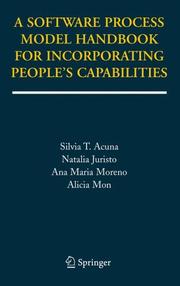 A Software process model handbook for incorporating people's capabilitiesSilvia T. Acuna, Natalia Juristo · 2005
 The artist's bodyTracey Warr, Amelia Jones · 2012
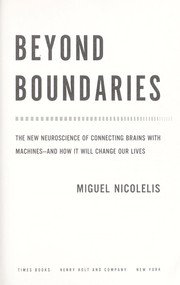 Beyond boundariesMiguel Nicolelis · 2011
 Skill acquisition and human performanceRobert W. Proctor · 1995
 Practical Aspects of Design ScienceMarkus Helfert, Brian Donnellan · 2012
Ranked by number of editions on Open Library, a rough measure of how lasting a book is.
🔗 Related topics
- Workload The term workload can refer to several different yet related entities. An old definition refers to workload as the amount of work an individual has to…
- Cognitive ergonomics Cognitive ergonomics is a scientific discipline that studies, evaluates, and designs tasks, jobs, products, environments and systems and how they interact…
- GOMS GOMS is a specialized human information processor model for human-computer interaction observation that describes a user's cognitive structure on four…
- Ergonomics Ergonomics, also known as human factors or human factors engineering (HFE), is the scientific study to understand the interaction between humans and other…
- Engineering psychology Engineering psychology is the science of human behavior and capability applied to the design and operation of systems and technology. As an applied field…
- Wayne D. Gray Wayne D. Gray is a professor of cognitive science and director of the cognitive science doctoral program at Rensselaer Polytechnic Institute. Gray seeks…
- Situation awareness Situation awareness or situational awareness, is the understanding of an environment, its elements, and how it changes with respect to time or other factors…
- Traffic psychology Traffic psychology is a discipline of psychology that studies the relationship between psychological processes and the behavior of road users. In general…