Live briefing

Everything about Huffman coding
Technique to compress data
In computer science and information theory, a Huffman code is a particular type of optimal prefix code that is commonly used for lossless data compression. The process of finding or using such a code is Huffman coding, an algorithm developed by David A. Huffman while he was a Sc.D. student at MIT, and published in the 1952 paper "A Method for the Construction of Minimum-Redundancy Codes". Wikipedia →
🧭 Start here: a 6-step reading path
- Read the overview: Huffman codingA 5-minute orientation
- Skim a recent paper: Reversible Data Hiding in Encrypted Images Based on Time-Varying Huffman Coding TableInfluential work since 2022
- Pick up a classic book: Mathematical structures for computer scienceThe most-reprinted book on the subject
- Read the landmark paper: Dynamic huffman codingCited 327 times
- Go sideways: Shannon–Fano codingA closely related topic
- Go sideways: Universal code (data compression)A closely related topic
📖 Definitions
No dictionary entry for this exact phrase.
🗂️ The subject at a glance
🏆 Landmark papers (most cited)
Dynamic huffman coding
Huffman Coding
An efficient chain code with Huffman coding
Optimal Selective Huffman Coding for Test-Data Compression
Memory efficient and high-speed search Huffman coding
Bidirectional Huffman Coding
Huffman Coding-Based Adaptive Spatial Modulation
Area efficient VLSI architectures for Huffman coding
🆕 Influential since 2022
Reversible Data Hiding in Encrypted Images Based on Time-Varying Huffman Coding Table
A novel image compression method using wavelet coefficients and Huffman coding
Improved near-lossless technique using the Huffman coding for enhancing the quality of image compression
A prediction-based lossless image compression procedure using dimension reduction and Huffman coding
Dingo algorithm-based forwarder selection and huffman coding to improve authentication
📚 Books worth reading
 Mathematical structures for computer scienceJudith L. Gersting · 1982
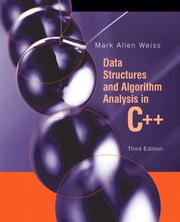 Data structures and algorithm analysis in CMark Allen Weiss · 1993
 Handbook of Coding TheoryVera Pless, W. Cary Huffman · 1998
 Fundamentals of Error Correcting CodesW. Cary Huffman, Vera Pless · 2003
- 📕Concise Encyclopedia of Coding TheoryW. Cary Huffman, Jon-Lark Kim · 2021
 A student's guide to coding and information theoryStefan M. Moser · 2012
 Data structures and algorithms in JavaAdam Drozdek · 2001
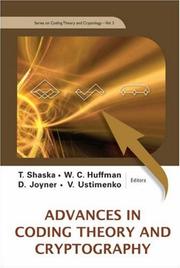 Advances in coding theory and crytographyTanush Shaska, W. Cary Huffman · 2007
Ranked by number of editions on Open Library, a rough measure of how lasting a book is.
🔗 Related topics
- Shannon–Fano coding In the field of data compression, Shannon–Fano coding, named after Claude Shannon and Robert Fano, is one of two related techniques for constructing a…
- Universal code (data compression) In data compression, a universal code for integers is a prefix code that maps the positive integers onto binary codewords, with the additional property…
- Canonical Huffman code In computer science and information theory, a canonical Huffman code is a particular type of Huffman code with unique properties which allow it to be described…
- Tunstall coding In computer science and information theory, Tunstall coding is a form of entropy coding used for lossless data compression. Tunstall coding was the subject…
- Prefix code A prefix code is a type of code system distinguished by its possession of the prefix property, which requires that there is no whole code word in the system…
- Arithmetic coding Arithmetic coding (AC) is a form of entropy coding used in lossless data compression. Normally, a string of characters is represented using a fixed number…
- Golomb coding Golomb coding is a lossless data compression method using a family of data compression codes invented by Solomon W. Golomb in the 1960s. Alphabets following…
- Garsia–Wachs algorithm The Garsia–Wachs algorithm is an efficient method for computers to construct optimal binary search trees and alphabetic Huffman codes, in linearithmic…