Everything about Arithmetic coding
Form of entropy encoding used in data compression

Arithmetic coding (AC) is a form of entropy coding used in lossless data compression. Normally, a string of characters is represented using a fixed number of bits per character, as in the ASCII code. When a string is converted to arithmetic encoding, frequently used characters will be stored with fewer bits and less-frequently occurring characters will be stored with more bits, resulting in fewer bits used in total. Arithmetic coding differs from other forms of entropy encoding, such as Huffman coding, in that rather than separating the input into component symbols and replacing each with a code, arithmetic coding encodes the entire message into a single number, an arbitrary-precision fraction q, where 0.0 ≤ q < 1.0. Wikipedia →
🧭 Start here: a 6-step reading path
- Read the overview: Arithmetic codingA 5-minute orientation
- Skim a recent paper: DNA-Aeon provides flexible arithmetic coding for constraint adherence and error correction in DNA storageInfluential work since 2022
- Pick up a classic book: Algebraic geometry codesThe most-reprinted book on the subject
- Read the landmark paper: Arithmetic coding for data compressionCited 2,051 times
- Go sideways: Asymmetric numeral systemsA closely related topic
- Go sideways: Range codingA closely related topic
📖 Definitions
No dictionary entry for this exact phrase.
🏆 Landmark papers (most cited)
Arithmetic coding for data compression
Arithmetic Coding
An Introduction to Arithmetic Coding
Generalized Kraft Inequality and Arithmetic Coding
Arithmetic coding revisited
Secure Arithmetic Coding
Integrating error detection into arithmetic coding
Arithmetic stream coding using fixed precision registers
🆕 Influential since 2022
DNA-Aeon provides flexible arithmetic coding for constraint adherence and error correction in DNA storage
Deep Lossless Compression Algorithm Based on Arithmetic Coding for Power Data
-Ary Distributed Arithmetic Coding for Uniform -Ary Sources
High-capacity reversible data hiding in encrypted images based on adaptive arithmetic coding and static Huffman coding
Medical Image Compression and Encryption Using Adaptive Arithmetic Coding, Quantization Technique and RSA in DWT Domain
📚 Books worth reading
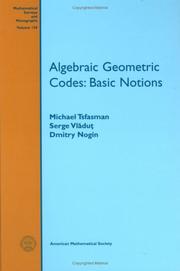 Algebraic geometry codesM. A. Tsfasman, Michael Tsfasman · 2007
 Error-control coding for computer systemsT. R. N. Rao · 1989
 Coding, cryptography, and combinatoricsWorkshop on Coding, Cryptography, and Combinatorics (2003 Huangshan Shi, China) · 2004
 Implementation of basic software for significant digit arithmeticSteven See Sun Lai · 1972
- 📕Arithmetic, geometry, cryptography, and coding theoryGilles Lachaud, M. A. Tsfasman · 2009
- 📕Essentials of error-control coding techniquesHideki Imai · 1990
 Error coding for arithmetic processorsThammavarapu R. N. Rao · 1974
- 📕Finite fieldsInternational Conference on Finite Fields and Applications (9th 2009 Ireland, Dublin) · 2010
Ranked by number of editions on Open Library, a rough measure of how lasting a book is.
🔗 Related topics
- Asymmetric numeral systems Asymmetric numeral systems (ANS) is a family of entropy encoding methods introduced by Jarosław (Jarek) Duda from Jagiellonian University, used in data…
- Range coding Range coding (or range encoding) is an entropy coding method defined by G. Nigel N. Martin in a 1979 paper, which effectively rediscovered the FIFO arithmetic…
- Context-adaptive binary arithmetic coding Context-adaptive binary arithmetic coding (CABAC) is a form of entropy encoding used in the H.264/MPEG-4 AVC and High Efficiency Video Coding (HEVC) standards…
- Huffman coding In computer science and information theory, a Huffman code is a particular type of optimal prefix code that is commonly used for lossless data compression…
- Entropy coding In information theory, an entropy coding (or entropy encoding) is any lossless data compression method that attempts to approach the lower bound declared…
- Universal code (data compression) In data compression, a universal code for integers is a prefix code that maps the positive integers onto binary codewords, with the additional property…
- Golomb coding Golomb coding is a lossless data compression method using a family of data compression codes invented by Solomon W. Golomb in the 1960s. Alphabets following…
- Lempel–Ziv–Welch Lempel–Ziv–Welch (LZW) is a universal lossless compression algorithm created by Abraham Lempel, Jacob Ziv, and Terry Welch. It was published by Welch in…