Everything about Model organism database
Type of biological database
Model organism databases (MODs) are biological databases, or knowledgebases, dedicated to the provision of in-depth biological data for intensively studied model organisms. MODs allow researchers to easily find background information on large sets of genes, efficiently plan experiments, integrate their data with existing knowledge, and formulate new hypotheses. They allow users to analyse results and interpret datasets, and the data they generate are increasingly used to describe less well studied species. Where possible, MODs share common approaches to collect and represent biological information. For example, all MODs use the Gene Ontology (GO) to describe functions, processes and cellular locations of specific gene products. Projects also exist to enable software sharing for curation, visualization and querying between different MODs. Organismal diversity and varying user requirements however mean that MODs are often required to customize capture, display, and provision of data. Wikipedia →
🧭 Start here: a 6-step reading path
- Read the overview: Model organism databaseA 5-minute orientation
- Pick up a classic book: Database designThe most-reprinted book on the subject
- Read the landmark paper: The Generic Genome Browser: A Building Block for a Model Organism System DatabaseCited 905 times
- Go sideways: PomBaseA closely related topic
- Go sideways: List of biological databasesA closely related topic
📖 Definitions
No dictionary entry for this exact phrase.
🗂️ The subject at a glance
🏆 Landmark papers (most cited)
📚 Books worth reading
 Database designRyan K. Stephens, Ryan Stephens · 2000
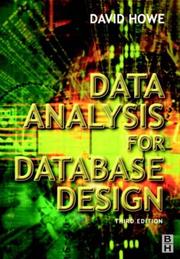 Data analysis for data base designD. R. Howe · 1989
Ranked by number of editions on Open Library, a rough measure of how lasting a book is.
🔗 Related topics
- PomBase PomBase is a model organism database that provides online access to the fission yeast Schizosaccharomyces pombe genome sequence and annotated features…
- List of biological databases Biological databases are stores of biological information. The journal Nucleic Acids Research regularly publishes special issues on biological databases…
- Generic Model Organism Database The Generic Model Organism Database (GMOD) project provides biological research communities with a toolkit of open-source software components for visualizing…
- Mouse Genome Informatics Mouse Genome Informatics (MGI) is a free, online database and bioinformatics resource hosted by The Jackson Laboratory, with funding by the National Human…
- DNA annotation In molecular biology and genetics, DNA annotation or genome annotation is the process of describing the structure and function of the components of a genome…
- FlyBase FlyBase is an online bioinformatics database and the primary repository of genetic and molecular data for the insect family Drosophilidae. For the most…
- Judith Blake (scientist) Judith Anne Blake is an American computational biologist at the Jackson Laboratory and Professor of Mammalian Genetics. Blake completed her Bachelor of…
- Superfamily database SUPERFAMILY is a database and search platform of structural and functional annotation for all proteins and genomes. It classifies amino acid sequences…