Everything about Punctuation
Marks to indicate pacing of written text
Punctuation marks are marks indicating how a piece of written text should be read and, consequently, understood. The oldest known examples of punctuation marks were found in the Mesha Stele from the 9th century BC, consisting of points between the words and horizontal strokes between sections. The alphabet-based writing began with no spaces, no capitalization, no vowels, and with only a few punctuation marks, as it was mostly aimed at recording business transactions. Only with the Greek playwrights did the ends of sentences begin to be marked to help actors know when to make a pause during performances. Punctuation includes space between words and both obsolete and modern signs. Wikipedia →
🧭 Start here: a 6-step reading path
- Read the overview: PunctuationA 5-minute orientation
- Pick up a classic book: The Elements of StyleThe most-reprinted book on the subject
- Read the landmark paper: General Patterns of Punctuation in the Paston LettersCited 0 times
- Go sideways: English punctuationA closely related topic
- Go sideways: Compound pointA closely related topic
📖 Definitions
No dictionary entry for this exact phrase.
🗂️ The subject at a glance
🏆 Landmark papers (most cited)
📚 Books worth reading
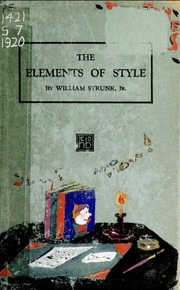 The Elements of StyleWilliam Strunk, Jr., E. B. White · 1920
 Translation and conflictMona Baker · 2005
 Exploring Translation TheoriesAnthony Pym · 2009
 Psychology of ReadingKeith Rayner, Alexander Pollatsek · 1994
- 📕English for JournalistsWynford Hicks · 2001
 Introducing interpreting studiesFranz Pöchhacker · 2004
 Essential college EnglishSelby, Norwood., Pamela S. Bledsoe · 1982
 Basic word orderRussell S. Tomlin · 1986
Ranked by number of editions on Open Library, a rough measure of how lasting a book is.
🔗 Related topics
- English punctuation Punctuation in the English language helps the reader to understand a sentence through visual means other than just the letters of the alphabet. English…
- Compound point The compound point is an obsolete typographical construction. Keith Houston reported that this form of punctuation doubling, which involved the comma dash…
- Semicolon The semicolon ; (or semi-colon) is a symbol commonly used as orthographic punctuation. In the English language, a semicolon is most commonly used to link…
- Japanese punctuation This article contains special characters. Without proper rendering support, you may see question marks, boxes, or other symbols. Japanese punctuation (Japanese:…
- Eats, Shoots & Leaves Eats, Shoots & Leaves: The Zero Tolerance Approach to Punctuation is a non-fiction book written by Lynne Truss, the former host of BBC Radio 4's Cutting…
- Full stop The full stop (Commonwealth English), period (North American English), or full point (.), is a punctuation mark used for several purposes, most often to…
- Space (punctuation) In writing, a space ( ) is a blank area that separates words, sentences, and other written or printed glyphs (characters). Conventions for spacing vary…
- Question mark The question mark ? (also known as interrogation point, query, or eroteme in journalism) is a punctuation mark that indicates a question or interrogative…