Everything about Compound point
Obsolete typographical construction
The compound point is an obsolete typographical construction. Keith Houston reported that this form of punctuation doubling, which involved the comma dash ,— , the semicolon dash ;— , the colon dash or "dog's bollocks" :— , and less often the stop-dash .— , arose in the seventeenth century, citing examples from as early as 1622. More traditionally, these paired forms of punctuation seem most often to have been called (generically) compound points and (specifically) the comma dash, semicolon dash, colon dash, and point dash. Wikipedia →
🧭 Start here: a 6-step reading path
- Read the overview: Compound pointA 5-minute orientation
- Skim a recent paper: Exploring the Feasibility of Cloud-Point Extraction for Bioactive Compound Recovery from Food Byproducts: A ReviewInfluential work since 2022
- Pick up a classic book: Non-stoichiometry in semiconductorsThe most-reprinted book on the subject
- Read the landmark paper: Friedreich's ataxia: Point mutations and clinical presentation of compound heterozygotesCited 239 times
- Go sideways: PunctuationA closely related topic
- Go sideways: DashA closely related topic
📖 Definitions
Noun An obsolete typographical construction made up of more than one punctuation mark, such as the comma dash (,—) or semicolon dash (;—).
🗂️ The subject at a glance
🏆 Landmark papers (most cited)
Friedreich's ataxia: Point mutations and clinical presentation of compound heterozygotes
Nanocrystalline high melting point compound-based materials
Electronic structures of point defects in III-V compound semiconductors
Microbial transformation of hydrophobic compound in cloud point system
Theoretical and positron annihilation study of point defects in intermetallic compound Ni3Al
Limits of compound and thinned point processes
Atomic structure of point defects in compound semiconductor surfaces
A new criterion for the alarm point for compound muscle action potentials
🆕 Influential since 2022
Exploring the Feasibility of Cloud-Point Extraction for Bioactive Compound Recovery from Food Byproducts: A Review
Adaptive Detection of Point Targets in Compound-Gaussian Clutter With Inverse Gamma Texture
Compound 3D building modeling with structure-aware partition and primitive assembly from airborne laser scanning point clouds
Neighborhood Multi-Compound Transformer for Point Cloud Registration
Bioactive compound extraction from mandarin peel via cloud point extraction and enhanced shelf stability through sodium alginate encapsulation
📚 Books worth reading
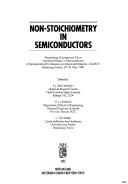 Non-stoichiometry in semiconductorsSymposium A3 on Non-Stoichiometry in Semiconductors (1991 Strasbourg, France), Klaus J. Bachmann · 1992
- 📕Melting point table of organosiliconsSheng-lieh Liu · 1968
- 📕Tochechnye defekty i kachestvo poluprovodnikovykh soedineniĭNikolaĭ Vladimirovich Sunt͡sov · 1980
- 📕Point defects quenched in NiAl and related intermetallic compoundsJiawen Fan · 1991
- 📕Apparatuur voor pT-metingen en de daarmee verkregen resultaten voor de systemen I₂, I₂-Au en I₂-Ag-AuPaul Leo Ott · 1983
- 📕The Cu²⁺ center in the II-VI semiconductors ZnS and CdS calculation of the fine structure and Zeeman behaviorTesfaye Telahun · 1994
- 📕Ion Implantation in SemiconductorsD. Steivenard · 1988
- 📕The influence of C and Si on the flow behavior of NiAl single crystalsM. L. Weaver · 1996
Ranked by number of editions on Open Library, a rough measure of how lasting a book is.
🔗 Related topics
- Punctuation Punctuation marks are marks indicating how a piece of written text should be read (silently or aloud) and, consequently, understood. The oldest known examples…
- Dash The dash is a punctuation mark consisting of a long horizontal line. It is similar in appearance to the hyphen but is longer and sometimes higher from…
- Semicolon The semicolon ; (or semi-colon) is a symbol commonly used as orthographic punctuation. In the English language, a semicolon is most commonly used to link…
- English punctuation Punctuation in the English language helps the reader to understand a sentence through visual means other than just the letters of the alphabet. English…
- Colon (punctuation) The colon, :, is a punctuation mark consisting of two equally sized dots aligned vertically. A colon often precedes an explanation, a list, or a quoted…
- Space (punctuation) In writing, a space ( ) is a blank area that separates words, sentences, and other written or printed glyphs (characters). Conventions for spacing vary…
- Sentence clause structure In grammar, sentence and clause structure, commonly known as sentence composition, is the classification of sentences based on the number and kind of clauses…
- Comma The comma , is a punctuation mark that appears in several variants in different languages. Some typefaces render it as a small line, slightly curved or…