Live briefing
Everything about Fusional language
Language where one kind of inflection indicates multiple changes of aspect
Fusional languages or inflected languages are a type of synthetic language, distinguished from agglutinative languages by their tendency to use single inflectional morphemes to denote multiple grammatical, syntactic, or semantic features. Wikipedia →
🧭 Start here: a 6-step reading path
- Read the overview: Fusional languageA 5-minute orientation
- Skim a recent paper: THE ROLE OF MORPHONOLOGICAL UNITS IN DESCRIPTION OF TYPOLOGICAL FEATURES OF FUSIONAL LANGUAGESInfluential work since 2022
- Pick up a classic book: Comparative Cultural Studies and the New WeltliteraturThe most-reprinted book on the subject
- Read the landmark paper: The Role of Morphology in Natural Language Processing: A Comparative Study of Agglutinative and Fusional LanguagesCited 0 times
- Go sideways: InflectionA closely related topic
- Go sideways: Old Norse morphologyA closely related topic
📖 Definitions
No dictionary entry for this exact phrase.
🏆 Landmark papers (most cited)
🆕 Influential since 2022
📚 Books worth reading
 Comparative Cultural Studies and the New WeltliteraturElke Sturm-Trigonakis · 2013
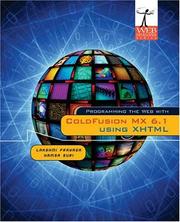 Programming the Web with ColdFusion MX 6.1 using XHTMLLakshmi Prayaga, Hamsa Suri · 2004
- 📕Creole subjects in the colonial AmericasRalph Bauer, José Antonio Mazzotti · 2009
 Materia DerretidaAmy S. Hansen · 2011
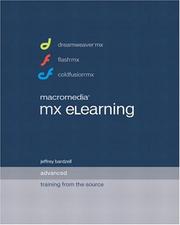 Macromedia MX eLearningJeffrey Bardzell · 2002
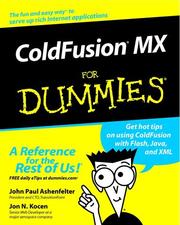 ColdFusion MX for dummiesJohn Paul Ashenfelter, Jon N. Kocen · 2002
 Inside ColdFusion MXJohn Cummings, Neil Ross · 2002
 Macromedia Coldfusion MX Web application construction kitBen Forta, Nate Weiss · 2002
Ranked by number of editions on Open Library, a rough measure of how lasting a book is.
🔗 Related topics
- Inflection In linguistic morphology, inflection (less commonly, inflexion) is a process of word formation in which a word is modified to express different grammatical…
- Old Norse morphology Old Norse has three categories of verbs (strong, weak, & present-preterite) and two categories of nouns (strong, weak). Conjugation and declension are…
- Marathi grammar This article contains Indic text. Without proper rendering support, you may see question marks or boxes, misplaced vowels or missing conjuncts instead…
- Zotung language Zotung (Zobya) is a language spoken by the Zotung people, in the town of Rezua, Chin State, Burma. It is a continuum of closely related dialects and accents…
- Ukrainian grammar Ukrainian grammar is complex and characterised by a high degree of inflection; moreover, it has a relatively free word order, although the dominant arrangement…
- Old English grammar The grammar of Old English differs greatly from Modern English, predominantly being much more inflected. As a Germanic language, Old English has a morphological…
- Lithuanian grammar Lithuanian grammar has a highly inflectional morphology. Its nouns are inflected for numbers and cases. Its verbs are inflected for person, tense-aspect-mood…
- Declension In linguistics, declension (verb: to decline) is the changing of the form of a word, generally to express its syntactic function in the sentence by way…