Live briefing

Everything about FreeBSD
Free and open-source Unix-like operating system
FreeBSD is a free and open-source Unix-like operating system descended from the Berkeley Software Distribution (BSD). The first version was released in 1993 developed from 386BSD, one of the first fully functional and free Unix clones on affordable home-class hardware, and has since continuously been the most commonly used BSD-derived operating system. Wikipedia →
🧭 Start here: a 6-step reading path
- Read the overview: FreeBSDA 5-minute orientation
- Skim a recent paper: Multipath TCP implementation under FreeBSD-13 for pluggable machine learning modelsInfluential work since 2022
- Pick up a classic book: The Complete FreeBSDThe most-reprinted book on the subject
- Read the landmark paper: The FreeBSD project: a replication case study of open source developmentCited 96 times
- Go sideways: Open Sound SystemA closely related topic
- Go sideways: Comparison of open-source operating systemsA closely related topic
📖 Definitions
No dictionary entry for this exact phrase.
🗂️ The subject at a glance
🏆 Landmark papers (most cited)
The FreeBSD project: a replication case study of open source development
Putting it all in the trunk: incremental software development in the FreeBSD open source project
Maintainability of the kernels of open-source operating systems: A comparison of Linux with FreeBSD, NetBSD, and OpenBSD
Developer autonomy in the FreeBSD open source project
An independent H-TCP implementation under FreeBSD 7.0
Active Queue Management in L4S with Asynchronous Advantage Actor-Critic: A FreeBSD Networking Stack Perspective
Measuring the evolutionary stability of software systems: case studies of Linux and FreeBSD
Thread Scheduling in FreeBSD 5.2
🆕 Influential since 2022
Multipath TCP implementation under FreeBSD-13 for pluggable machine learning models
Comparative Analysis of CPU Performance on FreeBSD 64-bit and RedHat 64-bit Operating System Against Denial of Service (DoS) Using Hping3
Evaluasi Performa PostgreSQL 16 pada FreeBSD 13.2 dan Ubuntu 22.04.3
Evaluasi Performa PostgreSQL 16 pada FreeBSD 13.2 dan Ubuntu 22.04.3
Arquitectura SDN sobre FreeBSD con WiFi 6E y 5G para el desafío de la última milla en áreas de alta densidad de usuarios
📚 Books worth reading
 The Complete FreeBSDGreg Lehey · 1996
 BSD UNIX toolboxChristopher Negus, Francois Caen · 2008
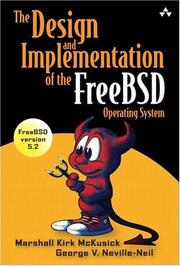 The design and implementation of the FreeBSD operating systemMarshall Kirk McKusick, George V. Neville-Neil · 2004
 FreeBSDAnnelise Graebner Anderson · 2001
 Absolute FreeBSDMichael W. Lucas · 2008
 Building a server with FreeBSD 7Bryan J. Hong · 2008
 DTraceBrendan Gregg · 2011
 Mastering FreeBSD and OpenBSD SecurityYanek Korff · 2005
Ranked by number of editions on Open Library, a rough measure of how lasting a book is.
🔗 Related topics
- Open Sound System The Open Sound System (OSS) is an interface for making and capturing sound in Unix and Unix-like operating systems. It is based on standard Unix devices…
- Comparison of open-source operating systems These tables compare free software / open-source operating systems. Where not all of the versions support a feature, the first version which supports it…
- Darwin (operating system) Darwin is the core Unix-like operating system of macOS, iOS, watchOS, tvOS, iPadOS, audioOS, visionOS, and bridgeOS. It previously existed as an independent…
- Berkeley Software Distribution The Berkeley Software Distribution, also known as BSD or Berkeley UNIX, is a Unix based operating system developed and distributed by the Computer Systems…
- Linux Linux (/ˈlɪnʊks/ LIN-uuks) is a family of free and open-source software Unix-like operating systems based on the Linux kernel, which was first released…
- GNU GNU (/ɡnuː/ GNOO) is an extensive collection of free software (387 packages as of June 2025[update]), which can be used as an operating system or can be…
- OpenZFS OpenZFS is an open-source implementation of the ZFS file system and volume manager initially developed by Sun Microsystems for the Solaris operating system…
- Minix MINIX is a family of Unix-like operating systems based on a microkernel architecture, written by American-Dutch computer scientist Andrew S. Tanenbaum…