Everything about Forward testing effect
Psychological learning theory

The forward testing effect, also known as test potentiated new learning, is a psychological learning theory which suggests that testing old information can improve learning of new information. Unlike traditional learning theories in educational psychology which have established the positive effect testing has when later attempting to retrieve the same information, the forward testing effect instead suggests that the testing experience itself possesses unique benefits which enhance the learning of new information. This memory effect is also distinct from the 'practice effect' which typically refers to an observed improvement which results from repetition and restudy, as the testing itself is considered as the catalyst for improved recall. Instead, this theory suggests that testing serves not only as a tool for assessment but as a learning tool which can aid in memory recall. The forward testing effect indicates that educators should encourage students to study using testing techniques rather than restudying information repeatedly. Wikipedia →
🧭 Start here: a 6-step reading path
- Read the overview: Forward testing effectA 5-minute orientation
- Skim a recent paper: The forward testing effect in spatial route learningInfluential work since 2022
- Pick up a classic book: Software EngineeringThe most-reprinted book on the subject
- Read the landmark paper: Enhancing learning and retrieval of new information: a review of the forward testing effectCited 90 times
- Go sideways: Spacing effectA closely related topic
- Go sideways: Encoding (memory)A closely related topic
📖 Definitions
No dictionary entry for this exact phrase.
🗂️ The subject at a glance
🏆 Landmark papers (most cited)
Enhancing learning and retrieval of new information: a review of the forward testing effect
Retrieval practice enhances new learning: the forward effect of testing
Testing prepares students to learn better: The forward effect of testing in category learning.
The forward testing effect on self-regulated study time allocation and metamemory monitoring.
The forward testing effect: Interim testing enhances inductive learning.
The Forward Testing Effect is Reliable and Independent of Learners’ Working Memory Capacity
The Forward Testing Effect is Immune to Acute Psychosocial Encoding/Retrieval Stress
Covert retrieval yields a forward testing effect across levels of successive list similarity
🆕 Influential since 2022
The forward testing effect in spatial route learning
Effect of Pre-Analytical Errors in Laboratory Testing Facilities: The Way Forward
The forward testing effect after a 1‐day delay across dissimilar video lessons
Buildup and release from proactive interference: The forward testing effect in children’s spatial memory
Attention and the forward testing effect
📚 Books worth reading
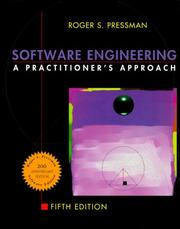 Software EngineeringRoger S. Pressman, Bruce Maxim · 1982
- 📕[Papers presented at the 20th Annual Conference of the Ontario Educational Research Council, Toronto, Ontario, December 1-2, 1978]Ontario Educational Research Council. Conference · 1966
 FX options and structured productsUwe Wystup · 2006
 Introduction to Probability and StatisticsJ. Susan Milton, Jesse C. Arnold · 1990
 Step ForwardJayme Adelson-Goldstein, Jenni Currie Santamaria · 2006
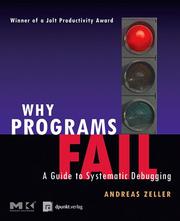 Why programs failAndreas Zeller · 2005
- 📕An in-flight investigation of ground effect on a forward-swept wing airplaneRobert E. Curry · 1990
 CornerstoneRobert M. Sherfield, Robert Sherfield · 2002
Ranked by number of editions on Open Library, a rough measure of how lasting a book is.
🔗 Related topics
- Spacing effect The spacing effect demonstrates that learning is more effective when study sessions are spaced out. This effect shows that more information is encoded…
- Encoding (memory) Memory has the ability to encode, store and recall information. Memories give an organism the capability to learn and adapt from previous experiences as…
- Encoding specificity principle The encoding specificity principle is the general principle that matching the encoding contexts of information at recall assists in the retrieval of episodic…
- Interference theory The interference theory is a theory regarding human memory. Interference occurs in learning. The notion is that memories encoded in long-term memory (LTM)…
- Recall (memory) Recall in human memory refers to the mental process of retrieving information from the past. Along with encoding and storage, it is one of the three core…
- Henry L. Roediger III Henry L. "Roddy" Roediger III (born July 24, 1947) is an American psychology researcher in the area of human learning and memory. He rose to prominence…
- Context-dependent memory In psychology, context-dependent memory is the improved recall of specific episodes or information when the context present at encoding and retrieval are…
- Testing effect The testing effect (also known as retrieval practice, active recall, practice testing, or test-enhanced learning) suggests long-term memory is increased…