Live briefing
Everything about Encoding specificity principle
Memory process-related theory
The encoding specificity principle is the general principle that matching the encoding contexts of information at recall assists in the retrieval of episodic memories. It provides a framework for understanding how the conditions present while encoding information relate to memory and recall of that information. Wikipedia →
🧭 Start here: a 6-step reading path
- Read the overview: Encoding specificity principleA 5-minute orientation
- Pick up a classic book: Clean CodeThe most-reprinted book on the subject
- Read the landmark paper: Generation-recognition theory and the encoding specificity principle.Cited 60 times
- Go sideways: Context-dependent memoryA closely related topic
- Go sideways: Recall testA closely related topic
📖 Definitions
No dictionary entry for this exact phrase.
🗂️ The subject at a glance
🏆 Landmark papers (most cited)
Generation-recognition theory and the encoding specificity principle.
Tests of the generality of the principle of encoding specificity
Strong cues are not necessarily weak: Thomson and Tulving (1970) and the encoding specificity principle revisited
Encoding Specificity Principle in Motor Short-Term Memory for Movement Extent
Forward and backward associations in cued recall: Predictions from the encoding specificity principle.
Exploring the Encoding Specificity Principle and Context-Dependent Recognition in Virtual Reality
STRATEGIES FOR ENHANCING READINESS AND RECALL IN CONTENT AREAS: THE ENCODING SPECIFICITY PRINCIPLE
Category Headings as Recall Cues: A Test of the Principle of Encoding Specificity
📚 Books worth reading
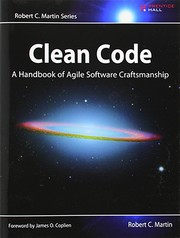 Clean CodeRobert C. Martin · 2008
 Essentials of educational psychologyJeanne Ellis Ormrod · 2006
- 📕Diversity-Oriented SynthesisAndrea Trabocchi, Stuart L. Schreiber · 2013
 Treaty Occupationay ToxicologySuelen Queiroz · 2010
 Organizational behaviorSteven Lattimore McShane, Mary Ann Young Von Glinow · 2001
 Principles of gene manipulation and genomicsS. B. Primrose · 2006
- 📕Recall, recognition and recognition failureE. Phillips
 MRIMark A. Brown · 2010
Ranked by number of editions on Open Library, a rough measure of how lasting a book is.
🔗 Related topics
- Context-dependent memory In psychology, context-dependent memory is the improved recall of specific episodes or information when the context present at encoding and retrieval are…
- Recall test In cognitive psychology, a recall test is a test of memory of mind in which participants are presented with stimuli and then, after a delay, are asked…
- Cue-dependent forgetting Cue-dependent forgetting, or retrieval failure, is the failure to recall information without memory cues. The term either pertains to semantic cues, state-depen…
- Recall (memory) Recall in human memory refers to the mental process of retrieving information from the past. Along with encoding and storage, it is one of the three core…
- Bilingual memory Bilingualism is the regular use of two fluent languages, and bilinguals are those individuals who need and use two (or more) languages in their everyday…
- Encoding (memory) Memory has the ability to encode, store and recall information. Memories give an organism the capability to learn and adapt from previous experiences as…
- Forward testing effect The forward testing effect, also known as test potentiated new learning, is a psychological learning theory which suggests that testing old information…
- Levels of processing model The levels of processing model, created by Fergus I. M. Craik and Robert S. Lockhart in 1972, describes memory recall of stimuli as a function of the depth…