Live briefing

Everything about Exponential decay
Decrease in value at a rate proportional to the current value
A quantity is subject to exponential decay if it decreases at a rate proportional to its current value. Symbolically, this process can be expressed by the following differential equation, where N is the quantity and λ (lambda) is a positive rate called the exponential decay constant, disintegration constant, rate constant, or transformation constant: Wikipedia →
🧭 Start here: a 6-step reading path
- Read the overview: Exponential decayA 5-minute orientation
- Skim a recent paper: Exponential Decay of Sensitivity in Graph-Structured Nonlinear ProgramsInfluential work since 2022
- Pick up a classic book: Physics for scientists and engineersThe most-reprinted book on the subject
- Read the landmark paper: Spectral Gap and Exponential Decay of CorrelationsCited 542 times
- Go sideways: Half-lifeA closely related topic
- Go sideways: Radioactive decayA closely related topic
📖 Definitions
Noun A decrease where the rate of decrease is proportional to the amount remaining.
🗂️ The subject at a glance
🏆 Landmark papers (most cited)
Spectral Gap and Exponential Decay of Correlations
Almost Exponential Decay Near Maxwellian
The Exponential Decay of Markov Transition Probabilities
Better estimates of exponential decay parameters
Exponential decay in a spin bath
Analysis of Multi-exponential Decay Curves
Seeking non-exponential decay
Rapid mixing implies exponential decay of correlations
🆕 Influential since 2022
Exponential Decay of Sensitivity in Graph-Structured Nonlinear Programs
Neural network for multi-exponential sound energy decay analysis
MAMGD: Gradient-Based Optimization Method Using Exponential Decay
The Landis conjecture on exponential decay
Stability and exponential decay for magnetohydrodynamic equations
📚 Books worth reading
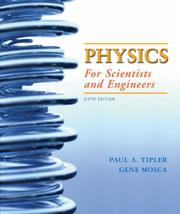 Physics for scientists and engineersPaul A. Tipler, Gene Mosca · 1990
 Calculus, Early TranscendentalsJames Stewart · 1991
 Single Variable Calculus, Early TranscendentalsJames Stewart · 1991
- 📕Lectures on Exponential Decay of Solutions of Second-Order Elliptic EquationsShmuel Agmon · 2014
 Calculus and PizzaClifford A. Pickover · 2003
- 📕Stochastic Structural DynamicsCho W. S. To · 2013
 Finite Difference Computing with Exponential Decay ModelsHans Petter Langtangen · 2016
 The Art and Science of Ultra-Wideband AntennasHans G. Schantz · 2005
Ranked by number of editions on Open Library, a rough measure of how lasting a book is.
🔗 Related topics
- Half-life Half-life (symbol t½) is the time required for a quantity (of substance) to reduce to half of its initial value. The term is commonly used in nuclear physics…
- Radioactive decay Radioactive decay (also known as nuclear decay, radioactivity, radioactive disintegration, or nuclear disintegration) is the process by which an unstable…
- Specific activity Specific activity (symbol a) is the activity per unit mass of a radionuclide and is a physical property of that radionuclide. It is usually given in units…
- Exponential distribution In probability theory and statistics, the exponential distribution or negative exponential distribution is the probability distribution of the distance…
- Secular equilibrium In nuclear physics, secular equilibrium is a situation in which the quantity of a radioactive isotope remains constant because its production rate (e.g…
- Population dynamics Population dynamics is the type of mathematics used to model and study the size and age composition of populations as dynamical systems. Population dynamics…
- Time constant In physics and engineering, the time constant, usually denoted by the Greek letter τ (tau), is the parameter characterizing the response to a step input…
- Gibbs measure In physics and mathematics, the Gibbs measure, named after Josiah Willard Gibbs, is a probability measure frequently seen in many problems of probability…