Live briefing

Everything about Specific activity
Activity per unit mass of a radionuclide
Specific activity is the activity per unit mass of a radionuclide and is a physical property of that radionuclide. It is usually given in units of becquerel per kilogram (Bq/kg), but another commonly used unit of specific activity is the curie per gram (Ci/g). 1 Ci/g = 37 TBq/kg. Wikipedia →
🧭 Start here: a 6-step reading path
- Read the overview: Specific activityA 5-minute orientation
- Skim a recent paper: Reprogramming site-specific retrotransposon activity to new DNA sitesInfluential work since 2022
- Pick up a classic book: Joyful learningThe most-reprinted book on the subject
- Read the landmark paper: A technique for radiolabeling DNA restriction endonuclease fragments to high specific activityCited 14,335 times
- Go sideways: Curie (unit)A closely related topic
- Go sideways: Radioactive decayA closely related topic
📖 Definitions
Noun The activity per unit mass of a radionuclide: number of decays per unit time, per mass.
Noun Used other than figuratively or idiomatically: see specific, activity.
🗂️ The subject at a glance
🏆 Landmark papers (most cited)
A technique for radiolabeling DNA restriction endonuclease fragments to high specific activity
Labeling deoxyribonucleic acid to high specific activity in vitro by nick translation with DNA polymerase I
THE PREPARATION OF 131I-LABELLED HUMAN GROWTH HORMONE OF HIGH SPECIFIC RADIOACTIVITY
Specific Association of Human Telomerase Activity with Immortal Cells and Cancer
Preparation of Iodine-131 Labelled Human Growth Hormone of High Specific Activity
Evaluation of Specific Ultraviolet Absorbance as an Indicator of the Chemical Composition and Reactivity of Dissolved Organic Carbon
🆕 Influential since 2022
Reprogramming site-specific retrotransposon activity to new DNA sites
Cell-class-specific electric field entrainment of neural activity
Motor cortical influence relies on task-specific activity covariation
A photonanozyme with light-empowered specific peroxidase-mimicking activity
Manipulation-specific cortical activity as mice handle food
📚 Books worth reading
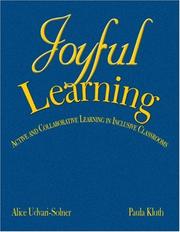 Joyful learningAlice Udvari-Solner, Paula Kluth · 2007
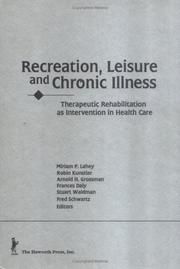 Recreation, leisure, and chronic illnessMiriam P. Lahey, Robin Kunstler · 1993
 A multilevel approach to the study of motor control and learningDebra J. Rose, Robert W. Christina · 1997
 Putting on the BrakesPatricia O. Quinn, Judith M. Stern · 1991
 Parenting young athletes the Ripken wayRipken, Cal, Cal Ripken · 2006
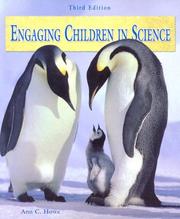 Engaging children in scienceAnn C. Howe, Linda Jones · 1992
 Teach your child to read in 100 easy lessonsSiegfried Engelman, Siegfried Engelmann · 1986
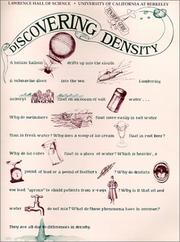 Discovering densityJacqueline Barber, Marion E. Buegler · 2001
Ranked by number of editions on Open Library, a rough measure of how lasting a book is.
🔗 Related topics
- Curie (unit) The curie (symbol Ci) is a non-SI unit of radioactivity originally defined in 1910. According to a notice in Nature at the time, it was to be named in…
- Radioactive decay Radioactive decay (also known as nuclear decay, radioactivity, radioactive disintegration, or nuclear disintegration) is the process by which an unstable…
- Banana equivalent dose Banana equivalent dose (BED) is an informal unit of measurement of ionizing radiation exposure, intended as a general educational example to compare a…
- Becquerel The becquerel (/ˌbɛkəˈrɛl/ ; symbol: Bq) is the unit of radioactivity in the International System of Units (SI). One becquerel is defined as an activity…
- Secular equilibrium In nuclear physics, secular equilibrium is a situation in which the quantity of a radioactive isotope remains constant because its production rate (e.g…
- Potassium-40 Potassium-40 (40K) is a long lived and the main naturally occurring radioactive isotope of potassium, with a half-life of 1.248 billion years. It makes…
- Chlorine-36 Chlorine-36 (36Cl) is a radioactive isotope of chlorine whose half-life is 301,000 years; it decays primarily (98%) by beta-minus decay to 36Ar, and the…
- Radiochemistry Radiochemistry is the chemistry of radioactive materials, where radioactive isotopes of elements are used to study the properties and chemical reactions…