Live briefing
Everything about Evidence
Material supporting an assertion
Evidence for a proposition is what supports the proposition. It is usually understood as an indication that the proposition is true. The exact definition and role of evidence vary across different fields. Wikipedia →
🧭 Start here: a 6-step reading path
- Read the overview: EvidenceA 5-minute orientation
- Skim a recent paper: Global burden and strength of evidence for 88 risk factors in 204 countries and 811 subnational locations, 1990–2021: a systematic analysis for the Global Burden of Disease Study 2021Influential work since 2022
- Pick up a classic book: Summary of the law relative to pleading and evidence in criminal casesThe most-reprinted book on the subject
- Read the landmark paper: Consumer Perceptions of Price, Quality, and Value: A Means-End Model and Synthesis of EvidenceCited 27,703 times
- Go sideways: Empirical evidenceA closely related topic
- Go sideways: Bayesian epistemologyA closely related topic
📖 Definitions
Noun Facts or observations presented in support of an assertion.
Noun Anything admitted by a court to prove or disprove alleged matters of fact in a trial.
Noun One who bears witness.
Noun A body of objectively verifiable facts that are positively indicative of, and/or exclusively concordant with, that one conclusion over any other.
🗂️ The subject at a glance
🏆 Landmark papers (most cited)
Consumer Perceptions of Price, Quality, and Value: A Means-End Model and Synthesis of Evidence
Some Tests of Specification for Panel Data: Monte Carlo Evidence and an Application to Employment Equations
Frailty in Older Adults: Evidence for a Phenotype
GRADE: an emerging consensus on rating quality of evidence and strength of recommendations
Observational Evidence from Supernovae for an Accelerating Universe and a Cosmological Constant
The Stakeholder Theory of the Corporation: Concepts, Evidence, and Implications
Towards a Methodology for Developing Evidence‐Informed Management Knowledge by Means of Systematic Review
Prejudice, social stress, and mental health in lesbian, gay, and bisexual populations: Conceptual issues and research evidence.
🆕 Influential since 2022
Global burden and strength of evidence for 88 risk factors in 204 countries and 811 subnational locations, 1990–2021: a systematic analysis for the Global Burden of Disease Study 2021
Experimental evidence on the productivity effects of generative artificial intelligence
The NANOGrav 15 yr Data Set: Evidence for a Gravitational-wave Background
A Synopsis of the Evidence for the Science and Clinical Management of Cardiovascular-Kidney-Metabolic (CKM) Syndrome: A Scientific Statement From the American Heart Association
The social determinants of mental health and disorder: evidence, prevention and recommendations
📚 Books worth reading
 Summary of the law relative to pleading and evidence in criminal casesJohn Frederick Archbold, P. J. Richardson · 1822
 A view of the evidences of ChristianityWilliam Paley · 1794
 The Case for Christ-JapaneseLee Strobel · 1656
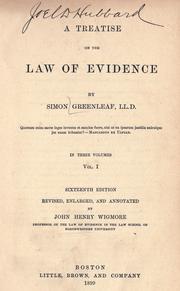 A treatise on the law of evidenceSimon Greenleaf · 1842
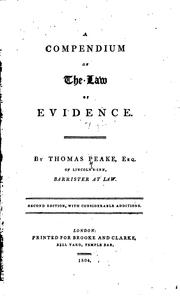 A compendium of the law of evidenceThomas Peake · 1801
 EthicsAristotle · 1900
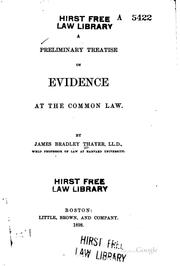 A preliminary treatise on evidence at the common lawJames Bradley Thayer, James Bradley Thayer · 1896
 Law of evidenceSidney L. Phipson · 1892
Ranked by number of editions on Open Library, a rough measure of how lasting a book is.
🔗 Related topics
- Empirical evidence Empirical evidence is evidence obtained through sense experience or experimental procedure. It is of central importance to the sciences and plays a role…
- Bayesian epistemology Bayesian epistemology is a formal approach to various topics in epistemology that has its roots in Thomas Bayes' work in the field of probability theory…
- Epistemology Epistemology is the branch of philosophy that examines the nature, origin, and limits of knowledge. Also called the theory of knowledge, it explores different…
- Deductive reasoning Deductive reasoning is the process of drawing valid inferences. An inference is valid if its conclusion follows logically from its premises, meaning that…
- Critical rationalism Critical rationalism is Karl Popper's answer to what he considered the most important problems of epistemology and philosophy of science: the problems…
- Scientific evidence Scientific evidence is evidence that serves to either support or counter a scientific theory or hypothesis, although scientists also use evidence in other…
- Mental state A mental state, or a mental property, is a state of mind of a person. Mental states comprise a diverse class, including perception, pain/pleasure experience…
- Coherentism In epistemology, there are two types of coherentism: the coherence theory of truth, and the coherence theory of justification (also known as epistemic…