Live briefing

Everything about Essentials of Programming Languages
2008 textbook
Essentials of Programming Languages (EOPL) is a textbook on programming languages by Daniel P. Friedman, Mitchell Wand, and Christopher T. Haynes. Wikipedia →
🧭 Start here: a 6-step reading path
- Read the overview: Essentials of Programming LanguagesA 5-minute orientation
- Pick up a classic book: Adventures of Huckleberry FinnThe most-reprinted book on the subject
- Read the landmark paper: Essentials of programming languagesCited 0 times
- Go sideways: Daniel P. FriedmanA closely related topic
- Go sideways: ContinuationA closely related topic
📖 Definitions
No dictionary entry for this exact phrase.
🗂️ The subject at a glance
No outline available.
🏆 Landmark papers (most cited)
📚 Books worth reading
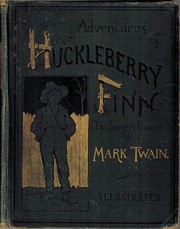 Adventures of Huckleberry FinnMark Twain · 1876
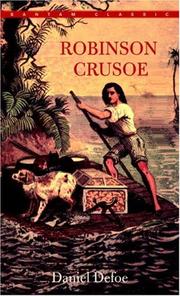 Robinson CrusoeDaniel Defoe · 1686
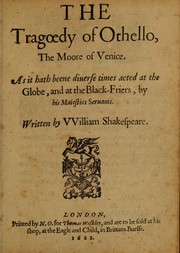 OthelloWilliam Shakespeare · 1622
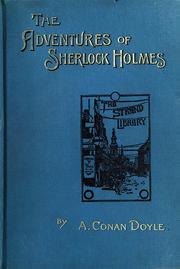 The Adventures of Sherlock Holmes [12 stories]Arthur Conan Doyle · 1892
 The Grapes of WrathJohn Steinbeck · 1939
 Course ILTCourse Technology · 2000
 C How to ProgramPaul J. Deitel, Harvey M. Deitel · 2007
 ContigoOscar Ozete, Sergio D. Guillen · 1987
Ranked by number of editions on Open Library, a rough measure of how lasting a book is.
🔗 Related topics
- Daniel P. Friedman Daniel Paul Friedman (born 1944) is a professor emeritus of Computer Science at Indiana University in Bloomington, Indiana. His research focuses on programming…
- Continuation In computer science, a continuation is an abstract representation of the control state of a computer program. A continuation implements (reifies) the program…
- M-expression In the Lisp programming language, M-expressions (or meta-expressions) were an early proposed syntax for Lisp, inspired by contemporary languages such as…
- Scheme (programming language) Scheme is a dialect of the Lisp family of programming languages. Scheme was created during the 1970s at the MIT Computer Science and Artificial Intelligence…
- Meta-circular evaluator In computing, a meta-circular evaluator (MCE) or meta-circular interpreter (MCI) is an interpreter which defines each feature of the interpreted language…
- History of the Scheme programming language The history of the Scheme programming language begins with the development of earlier members of the Lisp family of languages during the second half of…
- Lisp (programming language) Lisp (historically LISP, an abbreviation of "list processing") is a family of programming languages with a long history and a distinctive, fully parenthesized…
- History of compiler construction In computing, a compiler is a computer program that transforms source code written in a programming language or computer language (the source language)…