Live briefing
Everything about Engine efficiency
Work done divided by heat provided
Engine efficiency of thermal engines is the relationship between the total energy contained in the fuel, and the amount of energy used to perform useful work. There are two classifications of thermal engines-Internal combustion and External combustion engines. Wikipedia →
🧭 Start here: a 6-step reading path
- Read the overview: Engine efficiencyA 5-minute orientation
- Skim a recent paper: A high-efficiency internal combustion engine using oxygen and hydrogenInfluential work since 2022
- Pick up a classic book: The Principles of Scientific ManagementThe most-reprinted book on the subject
- Read the landmark paper: Dye-sensitized solar cells with 13% efficiency achieved through the molecular engineering of porphyrin sensitizersCited 4,347 times
- Go sideways: Thermal efficiencyA closely related topic
- Go sideways: Four-stroke engineA closely related topic
📖 Definitions
No dictionary entry for this exact phrase.
🏆 Landmark papers (most cited)
Dye-sensitized solar cells with 13% efficiency achieved through the molecular engineering of porphyrin sensitizers
Review of Vehicle Engine Efficiency and Emissions
Challenges for Increased Efficiency through Gasoline Engine Downsizing
Engine Technologies for Achieving 45% Thermal Efficiency of S.I. Engine
Review of Vehicle Engine Efficiency and Emissions
Review of Vehicle Engine Efficiency and Emissions
Efficiency of a Miller engine
Efficiency fluctuations of a quantum heat engine
🆕 Influential since 2022
A high-efficiency internal combustion engine using oxygen and hydrogen
Analysis of Efficiency of Thermopressor Application for Internal Combustion Engine
High-efficiency internal combustion engine for hybrid hydrogen-electric locomotives
Efficiency at Maximum Power of a Carnot Quantum Information Engine
Constructing an entangled Unruh Otto engine and its efficiency
📚 Books worth reading
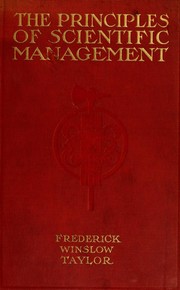 The Principles of Scientific ManagementFrederick Winslow Taylor · 1911
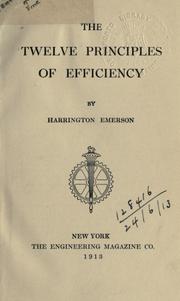 The twelve principles of efficiencyHarrington Emerson · 1912
 Fast Fashion SystemsTsan-Ming Choi · 2013
 How to gain an extra hour every dayRay Josephs · 1955
 The One Best WayRobert Kanigel · 1997
 Scientific managementClarence Bertrand Thompson · 1914
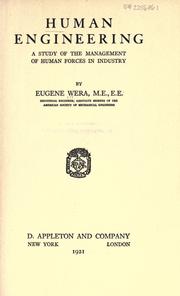 Human engineeringEugene Wera · 1921
 The psychology of managementLillian Moller Gilbreth · 1914
Ranked by number of editions on Open Library, a rough measure of how lasting a book is.
🔗 Related topics
- Thermal efficiency In thermodynamics, the thermal efficiency (ηth) is a dimensionless performance measure of a device that uses thermal energy, such as an internal combustion…
- Four-stroke engine A four-stroke (also four-cycle) engine is an internal combustion engine (ICE or IC engine) in which the piston completes four separate strokes while turning…
- Internal combustion engine An internal combustion engine (ICE or IC engine) is a heat engine in which the combustion of a fuel occurs with an oxidizer (usually air) in a combustion…
- Miller cycle In engineering, the Miller cycle is a thermodynamic cycle used in a type of internal combustion engine. The Miller cycle was patented by Ralph Miller,…
- Component parts of internal combustion engines Internal combustion engines come in a wide variety of types, but have certain family resemblances, and thus share many common types of components. Internal…
- Diesel cycle The Diesel cycle is a combustion process of a reciprocating internal combustion engine. In it, fuel is ignited by heat generated during the compression…
- Homogeneous charge compression ignition Homogeneous charge compression ignition (HCCI) is a form of internal combustion in which well-mixed fuel and oxidizer (typically air) are compressed to…
- Brayton cycle The Brayton cycle, also known as the Joule cycle, is a thermodynamic cycle that describes the operation of certain heat engines that have air or some other…