Live briefing
Everything about Encoding (memory)
Biological memory process in organisms
Memory has the ability to encode, store and recall information. Memories give an organism the capability to learn and adapt from previous experiences as well as build relationships. Encoding allows a perceived item of use or interest to be converted into a construct that can be stored within the brain and recalled later from long-term memory. Working memory stores information for immediate use or manipulation, which is aided through hooking onto previously archived items already present in the long-term memory of an individual. Wikipedia →
🧭 Start here: a 6-step reading path
- Read the overview: Encoding (memory)A 5-minute orientation
- Skim a recent paper: Engram neurons: Encoding, consolidation, retrieval, and forgetting of memoryInfluential work since 2022
- Pick up a classic book: The cognitive neuroscience of memoryThe most-reprinted book on the subject
- Read the landmark paper: Encoding specificity and retrieval processes in episodic memory.Cited 3,082 times
- Go sideways: Levels of processing modelA closely related topic
- Go sideways: Spacing effectA closely related topic
📖 Definitions
No dictionary entry for this exact phrase.
🏆 Landmark papers (most cited)
Encoding specificity and retrieval processes in episodic memory.
Hierarchical Encoding in Visual Working Memory
NMDA receptors and memory encoding
Memory encoding and aging: A neurocognitive perspective
Stimulus encoding and memory.
Neural Encoding of Olfactory Recognition Memory
Peri-encoding predictors of memory encoding and consolidation
Memory for faces: Encoding and retrieval operations
🆕 Influential since 2022
Engram neurons: Encoding, consolidation, retrieval, and forgetting of memory
Hippocampo-cortical circuits for selective memory encoding, routing, and replay
Hippocampal-cortical functional connectivity during memory encoding and retrieval
Midbrain–Hippocampus Structural Connectivity Selectively Predicts Motivated Memory Encoding
Random-Access Quantum Memory Using Chirped Pulse Phase Encoding
📚 Books worth reading
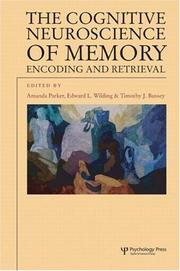 The cognitive neuroscience of memoryAmanda Parker · 2002
 A Course in In-Memory Data ManagementHasso Plattner · 2013
 CognitionRobert W. Weisberg, Lauretta M. Reeves · 2013
 How we rememberMichael E. Hasselmo · 2011
 Human memoryMary B. Howes · 2006
 Prospective memoryMark A. McDaniel, Gilles O. Einstein · 2007
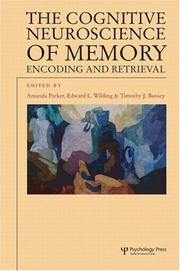 Cognitive Neuroscience of MemoryAmanda Parker · 2003
- 📕Encoding strategies and memory performanceBo S. Johansson · 1973
Ranked by number of editions on Open Library, a rough measure of how lasting a book is.
🔗 Related topics
- Levels of processing model The levels of processing model, created by Fergus I. M. Craik and Robert S. Lockhart in 1972, describes memory recall of stimuli as a function of the depth…
- Spacing effect The spacing effect demonstrates that learning is more effective when study sessions are spaced out. This effect shows that more information is encoded…
- Distributed practice Distributed practice (also known as spaced repetition, the spacing effect, or spaced practice) is a learning strategy, where practice is broken up into…
- Recall (memory) Recall in human memory refers to the mental process of retrieving information from the past. Along with encoding and storage, it is one of the three core…
- Encoding specificity principle The encoding specificity principle is the general principle that matching the encoding contexts of information at recall assists in the retrieval of episodic…
- Difference due to memory Difference due to memory (Dm) indexes differences in neural activity during the study phase of an experiment for items that subsequently are remembered…
- Generation effect The generation effect is a psychological phenomenon whereby information is better remembered if it is generated from one's own mind rather than simply…
- Storage (memory) In mental memory, storage is one of three fundamental stages along with encoding and retrieval. Memory is the process of storing and recalling information…