Everything about Digital AMPS
2G mobile-phone standard that uses time-division multiple access

Digital AMPS, most often referred to as TDMA, is a second-generation (2G) cellular phone system that was once prevalent throughout the Americas, particularly in the United States and Canada since the first commercial network was deployed in 1993. Former large D-AMPS networks included those of AT&T and Rogers Wireless. The name TDMA is based on the abbreviation for time-division multiple access, a common multiple access technique which is used in most 2G standards, including GSM. D-AMPS competed against GSM and systems based on code-division multiple access (CDMA). It is now considered end-of-life, as existing networks have shut and been replaced by GSM/GPRS or CDMA2000 technologies. The last carrier to operate a D-AMPS network was U.S. Cellular, who terminated it on February 10, 2009. Wikipedia →
🧭 Start here: a 6-step reading path
- Read the overview: Digital AMPSA 5-minute orientation
- Pick up a classic book: Digital media toolsThe most-reprinted book on the subject
- Read the landmark paper: Designing 1-V op amps using standard digital CMOS technologyCited 321 times
- Go sideways: List of wireless network technologiesA closely related topic
- Go sideways: Time-division multiple accessA closely related topic
📖 Definitions
No dictionary entry for this exact phrase.
🏆 Landmark papers (most cited)
Designing 1-V op amps using standard digital CMOS technology
AMPS: An Automated Mesochronous Pipeline Scheduler and Design Space Explorer for High Performance Digital Circuits
Comments on "Designing 1-V op-amps using standard digital CMOS technology
Comments on "Designing 1-V op-amps using standard digital CMOS technology" [and reply]
📚 Books worth reading
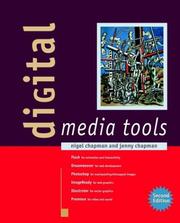 Digital media toolsNigel P. Chapman, Nigel Chapman · 2001
 Image processing, analysis, and machine visionMilan Sonka, Vaclav Hlavac · 1993
 Essential CG lighting techniques with 3ds MaxDarren Brooker · 2008
 Teach yourself visually Photoshop CCMike Wooldridge · 2013
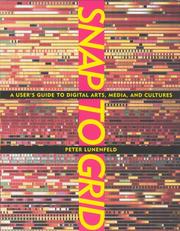 Snap to GridPeter Lunenfeld · 2000
 Digital systems design using VHDLCharles H. Roth · 1998
 Data acquisition and process control with the M68HC11 microcontrollerFrederick F. Driscoll, Robert F. Coughlin · 1993
 The discourse of Twitter and social mediaMichele Zappavigna · 2012
Ranked by number of editions on Open Library, a rough measure of how lasting a book is.
🔗 Related topics
- List of wireless network technologies This article summarizes the main generations of mobile network technology, from early analog radio systems to current digital cellular standards. 0G systems…
- Time-division multiple access Time-division multiple access (TDMA) is a channel access method for shared-medium networks. It allows several users to share the same frequency channel…
- Circuit Switched Data In communications, Circuit Switched Data (CSD) (also named GSM data) is the original form of data transmission developed for the time-division multiple…
- CdmaOne cdmaOne, most often simply referred to as CDMA, is a 2G digital cellular technology. It was the commercial name for Interim Standard 95 (IS-95), a technology…
- GPRS General Packet Radio Service (GPRS), also called 2.5G, is a mobile data standard that is part of the 2G cellular communication network Global System for…
- Vector sum excited linear prediction Vector sum excited linear prediction (VSELP) is a speech coding method used in several cellular standards. The VSELP algorithm is an analysis-by-synthesis…
- Advanced Mobile Phone System Advanced Mobile Phone System (AMPS) was an analog mobile phone system standard originally developed by Bell Labs and later modified in a cooperative effort…
- Cellular frequencies Cellular frequencies are the sets of frequency ranges within the ultra high frequency band that have been assigned for cellular-compatible mobile devices…