Live briefing

Everything about Time-division multiple access
Channel access method for networks using a shared communications medium
Time-division multiple access (TDMA) is a channel access method for shared-medium networks. It allows several users to share the same frequency channel by dividing the channel into different time slots. The users transmit in rapid succession, one after the other, each using its own time slot. This allows multiple stations to share the same transmission medium while using only a part of its channel capacity. Wikipedia →
🧭 Start here: a 6-step reading path
- Read the overview: Time-division multiple accessA 5-minute orientation
- Skim a recent paper: Burst-Mode Digital Signal Processing for Coherent Optical Time-Division Multiple AccessInfluential work since 2022
- Pick up a classic book: SDH/SONET Explained in Functional ModelsThe most-reprinted book on the subject
- Read the landmark paper: Time division multiple access methods for wireless personal communicationsCited 148 times
- Go sideways: UMTSA closely related topic
- Go sideways: Channel access methodA closely related topic
📖 Definitions
No dictionary entry for this exact phrase.
🗂️ The subject at a glance
🏆 Landmark papers (most cited)
Time division multiple access methods for wireless personal communications
Time-Reversal Division Multiple Access over Multi-Path Channels
Delay Analysis of a Time Division Multiple Access (TDMA) Channel
Space-Division Multiple Access Based on Time-Modulated Array
Spread-time code-division multiple access
Hybrid wavelength hopping/time spreading code division multiple access systems
Demonstration of a rapidly tunable optical time-division multiple-access coder
On the Properties of the Flexible Time Division Multiple Access Technique
🆕 Influential since 2022
Burst-Mode Digital Signal Processing for Coherent Optical Time-Division Multiple Access
Ultraviolet random access collaborative networking protocol based on time division multiple access
Iterative Interference Cancellation for Time Reversal Division Multiple Access
Distributed Passive Positioning and Sorting Method for Multi-Network Frequency-Hopping Time Division Multiple Access Signals
A Hybrid Anti-Collision Protocol Based on Frequency Division Multiple Access (FDMA) and Time Division Multiple Access (TDMA) for Radio Frequency Identification (RFID) Readers
📚 Books worth reading
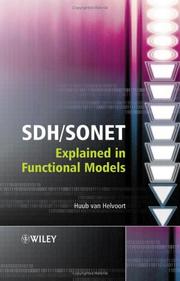 SDH/SONET Explained in Functional ModelsHuub van Helvoort · 2005
- 📕Satellite range delay simulator for a matrix-switched time division multiple-access network simulatorLawrence A. Nagy · 1990
- 📕Development and performance of the ACTS high speed VSATJ. Quintana · 1999
- 📕Approaches to optimization of SS/TDMA time slot assignmentThomas O. Wade · 1984
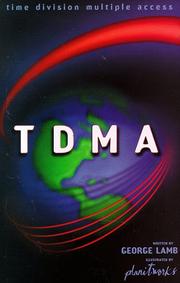 The TDMA BookGeorge Lamb · 1998
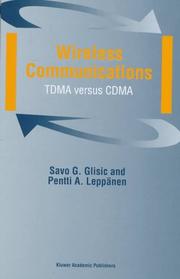 Wireless communicationsSavo G. Glisic, Pentti A. Leppänen · 1997
- 📕A wideband satcom based avionics network with CDMA uplink and TDM downlink · 2000
- 📕300 Mbps modem · 1988
Ranked by number of editions on Open Library, a rough measure of how lasting a book is.
🔗 Related topics
- UMTS The Universal Mobile Telecommunications System (UMTS) is a 3G mobile cellular system for networks based on the GSM standard. UMTS uses wideband code-division…
- Channel access method In telecommunications and computer networks, a channel access method or multiple access method allows more than two terminals connected to the same transmission…
- 5G NR frequency bands 5G New Radio (5G NR), which is the air interface or radio access technology of the 5G mobile networks, operate in two different frequency bands. Frequency…
- LTE frequency bands Long-Term Evolution (LTE) telecommunications networks use several frequency bands with associated bandwidths. From Tables 5.5-1 "E-UTRA Operating Bands"…
- Frequency-division multiple access Frequency-division multiple access (FDMA) is a channel access method used in some multiple-access protocols. FDMA allows multiple users to send data through…
- GPRS General Packet Radio Service (GPRS), also called 2.5G, is a mobile data standard that is part of the 2G cellular communication network Global System for…
- Duplex (telecommunications) A duplex communication system is a point-to-point system composed of two or more connected parties or devices that can communicate with one another in…
- E-UTRA E-UTRA is the air interface of 3rd Generation Partnership Project (3GPP) Long Term Evolution (LTE) upgrade path for mobile networks. It is an acronym for…