Live briefing

Everything about Decimal computer
Computer operating on base-10 numbers
A decimal computer is a computer that represents and operates on numbers and addresses in decimal format – instead of binary as is common in most modern computers. Some decimal computers had a variable word length, which enabled operations on relatively large numbers. Wikipedia →
🧭 Start here: a 6-step reading path
- Read the overview: Decimal computerA 5-minute orientation
- Skim a recent paper: Decimal Versus Binary Representation of Numbers in ComputersInfluential work since 2022
- Pick up a classic book: Mezinárodní desetinné tříděníThe most-reprinted book on the subject
- Read the landmark paper: Accurate arithmetic results for decimal data on non-decimal computersCited 7 times
- Go sideways: Binary-coded decimalA closely related topic
- Go sideways: Intel BCD opcodesA closely related topic
📖 Definitions
No dictionary entry for this exact phrase.
🗂️ The subject at a glance
🏆 Landmark papers (most cited)
Accurate arithmetic results for decimal data on non-decimal computers
Pracniques: simulation of Boolean functions in a decimal computer
Programmed error correction on a decimal computer
A Full Decimal Method of Address Assignment for Networked Computer
Simulation of a decimal computer on the ?MIR? computer
Tables for decimal age conversion by computer*
Enhancing an LSI computer to handle decimal data
Computer support for diagnostic teaching – the case of decimal numbers
🆕 Influential since 2022
📚 Books worth reading
- 📕Mezinárodní desetinné tříděníÚstředí vědeckých, technických a ekonomických informací. · 1974
- 📕Modern approaches to the management of a classificatonRobert R. Freeman · 1966
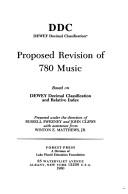 DDC, Dewey decimal classificationMelvil Dewey · 1980
 Continued-product algorithms for division, logarithm, exponential and square root in radix tenCatherine Yuk-Fun Chow · 1978
- 📕Dewey decimal classification, DDCMelvil Dewey · 1986
- 📕Dewey for Windows guideJulianne Beall · 1998
- 📕Uniwersalna klasyfikacja dziesiętnaInternational Federation for Documentation · 1971
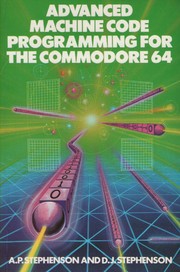 Advanced machine code programming for the Commodore 64A. P. Stephenson · 1984
Ranked by number of editions on Open Library, a rough measure of how lasting a book is.
🔗 Related topics
- Binary-coded decimal In computing and electronic systems, binary-coded decimal (BCD) is a class of binary encodings of decimal numbers where each digit is represented by a…
- Intel BCD opcodes The Intel BCD opcodes are a set of six x86 instructions that operate with binary-coded decimal numbers: AAA, DAA, AAS, DAS, AAM, and AAD. Most arithmetic…
- Decimal64 floating-point format In computing, decimal64 is a decimal floating-point computer number format that occupies 8 bytes (64 bits) in computer memory. The format was formally…
- Decimal32 floating-point format In computing, decimal32 is a decimal floating-point computer numbering format that occupies 4 bytes (32 bits) in computer memory. Like the binary16 and…
- IBM hexadecimal floating-point Hexadecimal floating-point (HFP) is a format for encoding floating-point numbers first introduced on the IBM System/360 computers, and supported on subsequent…
- Decimal floating point Decimal floating-point (DFP) arithmetic refers to both a representation and operations on decimal floating-point numbers. Working directly with decimal…
- Densely packed decimal Densely packed decimal (DPD) is an efficient method for binary encoding decimal digits. The traditional system of binary encoding for decimal digits, known…
- 36-bit computing In computer architecture, 36-bit integers, memory addresses, or other data units are those that are 36 bits (six six-bit characters) wide. Also, 36-bit…