Everything about Database schema
Visual representation of database system relationships

The database schema is the structure of a database described in a formal language supported typically by a relational database management system (RDBMS). The term "schema" refers to the organization of data as a blueprint of how the database is constructed. The formal definition of a database schema is a set of formulas (sentences) called integrity constraints imposed on a database. These integrity constraints ensure compatibility between parts of the schema. All constraints are expressible in the same language. A database can be considered a structure in realization of the database language. The states of a created conceptual schema are transformed into an explicit mapping, the database schema. This describes how real-world entities are modeled in the database. Wikipedia →
🧭 Start here: a 6-step reading path
- Read the overview: Database schemaA 5-minute orientation
- Skim a recent paper: Self-tuning Database Systems: A Systematic Literature Review of Automatic Database Schema Design and TuningInfluential work since 2022
- Pick up a classic book: Database system conceptsThe most-reprinted book on the subject
- Read the landmark paper: Graceful database schema evolutionCited 110 times
- Go sideways: Data definition languageA closely related topic
- Go sideways: Relational databaseA closely related topic
📖 Definitions
No dictionary entry for this exact phrase.
🏆 Landmark papers (most cited)
Graceful database schema evolution
Automating the database schema evolution process
Schema evolution in object-oriented database systems
Schema evolution in database systems
The Logical Access Path Schema of a Database
Schema transformation without database reorganization
Understanding database schema evolution: A case study
Schema analysis for database restructuring
🆕 Influential since 2022
Self-tuning Database Systems: A Systematic Literature Review of Automatic Database Schema Design and Tuning
Solving Hard Variants of Database Schema Matching on Quantum Computers
Detecting Schema-Related Logic Bugs in Relational DBMSs via Equivalent Database Construction
A multilingual translator to SQL with database schema pruning to improve self-attention
Generating database schema from requirement specification based on natural language processing and large language model
📚 Books worth reading
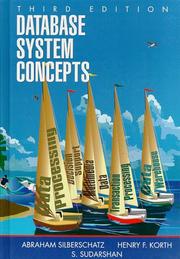 Database system conceptsAbraham Silberschatz · 1997
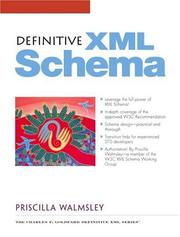 Definitive XML SchemaPriscilla Walmsley · 2001
- 📕MatML version 3.0 schemaE. F. Begley · 2003
 Schema Matching And MappingZohra Bellahsene · 2011
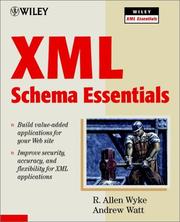 XML Schema EssentialsR. Allen Wyke, Andrew Watt · 2002
 Expert Oracle database 11g administrationSam R. Alapati · 2009
- 📕MatML version 3.0 schemaE. F Begley · 2003
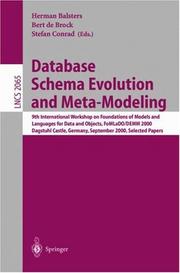 Database schema evolution and meta-modelingInternational Workshop on Foundations of Models and Languages for Data and Objects (9th 2000 Dagstuhl, Wadern, Germany) · 2001
Ranked by number of editions on Open Library, a rough measure of how lasting a book is.
🔗 Related topics
- Data definition language In the context of SQL, data definition language (DDL) is a syntax for creating and modifying database objects such as tables, indices, and users. DDL statements…
- Relational database A relational database (RDB) is a database based on the relational model of data, as proposed by E. F. Codd in 1970. A Relational Database Management System…
- Object–relational database An object–relational database (ORD), or object–relational database management system (ORDBMS), is a database management system (DBMS) similar to a relational…
- Object–relational impedance mismatch Object–relational impedance mismatch is a set of difficulties going between data in relational data stores and data in domain-driven object models. Relational…
- Entity–attribute–value model An entity–attribute–value model (EAV) is a data model optimized for the space-efficient storage of sparse—or ad-hoc—property or data values, intended for…
- Oracle Designer Oracle Designer was Oracle's CASE tool for designing an information system and generating it. After generating the information system one is able to edit…
- Database In computing, a database is an organized collection of data or a type of data store based on the use of a database management system (DBMS), the software…
- Enhanced entity–relationship model The Enhanced Entity–Relationship (EER) model is an extended version of the Entity–Relationship (ER) model used in database design. It incorporates additional…