Everything about DNA encryption
Hiding or perplexing genetic information by a computational method
DNA encryption is the process of hiding or perplexing genetic information by a computational method in order to improve genetic privacy in DNA sequencing processes. The human genome is complex and long, but it is very possible to interpret important, and identifying, information from smaller variabilities, rather than reading the entire genome. A whole human genome is a string of 3.2 billion base paired nucleotides, the building blocks of life, but between individuals the genetic variation differs only by 0.5%, an important 0.5% that accounts for all of human diversity, the pathology of different diseases, and ancestral story. Emerging strategies incorporate different methods, such as randomization algorithms and cryptographic approaches, to de-identify the genetic sequence from the individual, and fundamentally, isolate only the necessary information while protecting the rest of the genome from unnecessary inquiry. The priority now is to ascertain which methods are robust, and how policy should ensure the ongoing protection of genetic privacy. Wikipedia →
🧭 Start here: a 6-step reading path
- Read the overview: DNA encryptionA 5-minute orientation
- Skim a recent paper: Image encryption algorithm based on DNA encoding and CNNInfluential work since 2022
- Pick up a classic book: Out of controlThe most-reprinted book on the subject
- Read the landmark paper: Cryptanalysis of a DNA-based image encryption schemeCited 184 times
- Go sideways: Personal genomicsA closely related topic
- Go sideways: Genetic privacyA closely related topic
📖 Definitions
No dictionary entry for this exact phrase.
🗂️ The subject at a glance
🏆 Landmark papers (most cited)
Cryptanalysis of a DNA-based image encryption scheme
Selective medical image encryption using DNA cryptography
Chaotic image encryption algorithm using frequency‐domain DNA encoding
Image Encryption-Then-Transmission Using DNA Encryption Algorithm and The Double Chaos
Asymmetric encryption and signature method with DNA technology
Binary search tree image encryption with DNA
Image encryption based on fractional chaotic pseudo-random number generator and DNA encryption method
A New Image Encryption Algorithm Based on DNA State Machine for UAV Data Encryption
🆕 Influential since 2022
📚 Books worth reading
 Out of controlKevin Kelly · 1994
- 📕Advances of DNA Computing in CryptographySuyel Namasudra, Ganesh Chandra Deka · 2018
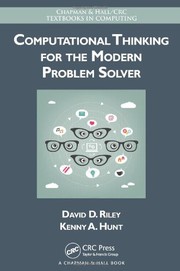 Computational Thinking for the Modern Problem SolverKenny A. Hunt, David D. Riley · 2014
Ranked by number of editions on Open Library, a rough measure of how lasting a book is.
🔗 Related topics
- Personal genomics Personal genomics or consumer genetics is the branch of genomics concerned with the sequencing, analysis and interpretation of the genome of an individual…
- Genetic privacy Genetic privacy involves the concept of personal privacy concerning the storing, repurposing, provision to third parties, and displaying of information…
- Population genomics Population genomics is the large-scale comparison of DNA sequences of populations. Population genomics is a neologism that is associated with population…
- Exome sequencing Exome sequencing, also known as whole exome sequencing (WES), is a genomic technique for sequencing all of the protein-coding regions of genes in a genome…
- Genetic discrimination Genetic discrimination occurs when people treat others (or are treated) differently because they have or are perceived to have a gene mutation(s) that…
- Elective genetic and genomic testing Elective genetic and genomic testing are DNA tests performed for an individual who does not have an indication for testing. An elective genetic test analyzes…
- Biobank A biobank is a type of biorepository that stores biological specimens (usually human) for use in research. Biobanks have become an important resource in…
- Nebula Genomics Nebula Genomics is a personal genomics company based in San Francisco, California. It offers a whole-genome sequencing service. Nebula Genomics was co-founded…