Live briefing
Everything about Confidential computing
Privacy-enhancing computing technique
Confidential computing is a security and privacy-enhancing computational technique focused on protecting data in use. Confidential computing can be used in conjunction with storage and network encryption, which protect data at rest and data in transit respectively. It is designed to address software, protocol, cryptographic, and basic physical and supply-chain attacks, although some critics have demonstrated architectural and side-channel attacks effective against the technology. Wikipedia →
🧭 Start here: a 6-step reading path
- Read the overview: Confidential computingA 5-minute orientation
- Skim a recent paper: Confidential High-Performance Computing in the Public CloudInfluential work since 2022
- Pick up a classic book: The Code BookThe most-reprinted book on the subject
- Read the landmark paper: Survey of research on confidential computingCited 41 times
- Go sideways: Software Guard ExtensionsA closely related topic
- Go sideways: Trusted execution environmentA closely related topic
📖 Definitions
No dictionary entry for this exact phrase.
🏆 Landmark papers (most cited)
Survey of research on confidential computing
Toward confidential cloud computing
Machine Learning with Confidential Computing: A Systematization of Knowledge
Confidential Computing Across Edge‐To‐Cloud for Machine Learning: A Survey Study
Confidential computing and related technologies: a critical review
Confidential computing in cloud/fog-based Internet of Things scenarios
Ensuring State Continuity for Confidential Computing: A Blockchain-Based Approach
Toward Confidential Cloud Computing
🆕 Influential since 2022
Confidential High-Performance Computing in the Public Cloud
Confidential Computing Using Trusted Execution Environments
Confidential Computing: Elevating Cloud Security and Privacy
Confidential Computing on Heterogeneous CPU-GPU Systems: Survey and Future Directions
Confidential Computing in Edge- Cloud Hierarchy
📚 Books worth reading
 The Code BookSimon Singh · 1999
 Healthcare FraudRebecca S. Busch · 2007
- 📕Noiseless steganographyAbdelrahman Desoky · 2012
 Internet searches for vetting, investigations, and open-source intelligenceEdward J. Appel · 2010
 Exploding DataMichael Chertoff · 2018
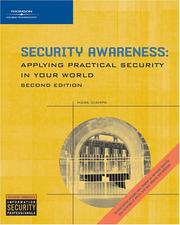 Security AwarenessMark Ciampa · 2004
 Information SecurityTimothy P. Layton · 2006
 Critical information infrastructure protection and the lawStewart D. Personick, Cynthia A. Patterson · 2003
Ranked by number of editions on Open Library, a rough measure of how lasting a book is.
🔗 Related topics
- Software Guard Extensions Intel Software Guard Extensions (SGX) is a set of instruction codes implementing trusted execution environment that are built into some Intel central processing…
- Trusted execution environment A trusted execution environment (TEE) is a secure area of a main processor. It helps the code and data loaded inside it be protected with respect to confidentia…
- Trusted Computing Trusted Computing (TC) is a technology developed and promoted by the Trusted Computing Group. The term is taken from the field of trusted systems and has…
- Trust Domain Extensions Intel Trust Domain Extensions (Intel TDX) is a CPU-level technology proposed by Intel in May 2021 for implementing a trusted execution environment in which…
- PrivateCore PrivateCore is a venture-backed startup located in Palo Alto, California that develops software to secure server data through server attestation and memory…
- Confidential Consortium Framework Originally developed in 2019 by Microsoft under the name Coco and later rebranded to Confidential Consortium Framework (CCF), it is an open-source framework…
- Foreshadow Foreshadow, known as L1 Terminal Fault (L1TF) by Intel, is a vulnerability that affects modern microprocessors that was first discovered by two independent…
- Opal Storage Specification The Opal Storage Specification is a set of specifications for features of data storage devices (such as hard disk drives and solid state drives) that enhance…