Live briefing
Everything about Software Guard Extensions
Security-related instruction code processor extension
Intel Software Guard Extensions (SGX) is a set of instruction codes implementing trusted execution environment that are built into some Intel central processing units (CPUs). They allow user-level and operating system code to define protected private regions of memory, called enclaves. SGX is designed to be useful for implementing secure remote computation, secure web browsing, and digital rights management (DRM). Other applications include concealment of proprietary algorithms and of encryption keys. Wikipedia →
🧭 Start here: a 6-step reading path
- Read the overview: Software Guard ExtensionsA 5-minute orientation
- Pick up a classic book: The RSpec BookThe most-reprinted book on the subject
- Read the landmark paper: PRINCESS: Privacy-protecting Rare disease International Network Collaboration via Encryption through Software guard extensionSCited 85 times
- Go sideways: ForeshadowA closely related topic
- Go sideways: Transient execution CPU vulnerabilityA closely related topic
📖 Definitions
No dictionary entry for this exact phrase.
🗂️ The subject at a glance
🏆 Landmark papers (most cited)
PRINCESS: Privacy-protecting Rare disease International Network Collaboration via Encryption through Software guard extensionS
Intel Software Guard Extensions Applications: A Survey
PRESAGE: PRivacy-preserving gEnetic testing via SoftwAre Guard Extension
Secure Software Defined Networks Controller Storage using Intel Software Guard Extensions
Managing confidentiality leaks through private algorithms on Software Guard eXtensions (SGX) enclaves
Avaliação do Intel Software Guard Extensions via Emulação
📚 Books worth reading
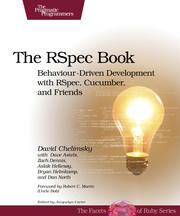 The RSpec BookDavid Chelimsky, Dave Astels · 2010
 Complete visualizing technologyDebra Geoghan · 2013
 A TOUR OF THE WORLDMalik Mansab Khan, Muhammad Rafique Abdul Aziz · 2025
Ranked by number of editions on Open Library, a rough measure of how lasting a book is.
🔗 Related topics
- Foreshadow Foreshadow, known as L1 Terminal Fault (L1TF) by Intel, is a vulnerability that affects modern microprocessors that was first discovered by two independent…
- Transient execution CPU vulnerability Transient execution CPU vulnerabilities are vulnerabilities in which instructions, most often optimized using speculative execution, are executed temporarily…
- Spectre (security vulnerability) Spectre is a class of speculative execution CPU vulnerabilities that involve side-channel attacks, first discovered in 2017. There are multiple variants…
- Downfall (security vulnerability) Downfall, known as Gather Data Sampling (GDS) by Intel, is a computer security vulnerability found in 6th through 11th generations of consumer and 1st…
- Meltdown (security vulnerability) Meltdown is one of the two original speculative execution CPU vulnerabilities (the other being Spectre). Meltdown affects Intel x86 microprocessors, IBM…
- Transactional Synchronization Extensions Transactional Synchronization Extensions (TSX), also called Transactional Synchronization Extensions New Instructions (TSX-NI), is an extension to the…
- Load value injection Load value injection (LVI) is an attack on Intel microprocessors that can be used to attack Intel's Software Guard Extensions (SGX) technology. It is a…
- Trusted execution environment A trusted execution environment (TEE) is a secure area of a main processor. It helps the code and data loaded inside it be protected with respect to confidentia…