Live briefing

Everything about Computer network
Network that allows computers to share resources and communicate with each other
In computer science, computer engineering, and telecommunications, a network is a group of communicating computers and peripherals called hosts, which communicate data to other hosts via communication protocols, as facilitated by networking hardware. Wikipedia →
🧭 Start here: a 6-step reading path
- Read the overview: Computer networkA 5-minute orientation
- Skim a recent paper: A review of convolutional neural networks in computer visionInfluential work since 2022
- Pick up a classic book: The Internet for DummiesThe most-reprinted book on the subject
- Read the landmark paper: 3D Slicer as an image computing platform for the Quantitative Imaging NetworkCited 8,856 times
- Go sideways: EthernetA closely related topic
- Go sideways: Network topologyA closely related topic
📖 Definitions
Noun A group of computers that use a set of common communication protocols over digital interconnections for the purpose of sharing resources located on or provided by the network nodes.
🗂️ The subject at a glance
🏆 Landmark papers (most cited)
3D Slicer as an image computing platform for the Quantitative Imaging Network
Deep Convolutional Neural Networks for Computer-Aided Detection: CNN Architectures, Dataset Characteristics and Transfer Learning
EEGNet: a compact convolutional neural network for EEG-based brain–computer interfaces
Computer-Aided Network Tuning
Optical Computer Switching Network
Network properties of the ARPA computer network
Computer Network Architectures
Computer network threat modelling
🆕 Influential since 2022
A review of convolutional neural networks in computer vision
Computer Network Intrusion Anomaly Detection with Recurrent Neural Network
Computer Network Security Technology and Prevention Strategy Analysis
Computer Communication Network Fault Detection Based on Improved Neural Network Algorithm
Computer Network Topologies
📚 Books worth reading
 The Internet for DummiesJohn R. Levine, Carol Baroudi · 1993
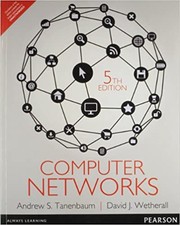 Computer NetworksAndrew S. Tanenbaum, John David Wetherall · 1981
 Hacking for DummiesKevin Beaver, Jutta Schmidt · 2004
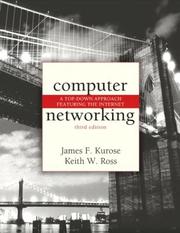 Computer networkingJames F. Kurose, Keith W. Ross · 1900
 C How to ProgramPaul J. Deitel, Harvey M. Deitel · 2007
 Technology in actionAlan Evans, Alan Evans · 2004
 IEEE standard for information technologyInstitute of Electrical and Electronics Engineers · 1991
 Advanced Computing and Systems for SecurityRituparna Chaki, Agostino Cortesi · 2015
Ranked by number of editions on Open Library, a rough measure of how lasting a book is.
🔗 Related topics
- Ethernet Ethernet (/ˈiːθərnɛt/ EE-thər-net) is a family of wired computer networking standards designed for (but not limited to) local area networks (LAN), access…
- Network topology Network topology is the arrangement of the elements (links, nodes, etc.) of a communication network. Network topology can be used to define or describe…
- Multicast In computer networking, multicast is a type of group communication where data transmission is addressed to a group of destination computers simultaneously…
- Data link layer The data link layer, or layer 2, is the second layer of the seven-layer OSI model of computer networking. This layer is the protocol layer that transfers…
- Wide area network A wide area network (WAN) is a telecommunications network that extends over a large geographic area. Wide area networks are often established with leased…
- Local area network A local area network (LAN) is a computer network that interconnects computers within a limited area such as a residence, campus, or building, and has its…
- VLAN A virtual local area network (VLAN) is a local area network broadcast domain that is partitioned and isolated in a virtual network at the data link layer…
- Data center bridging Data center bridging (DCB) is a set of enhancements to the Ethernet local area network communication protocol for use in data center environments, in particular…