Live briefing

Everything about Complementary colors
Pairs of colors losing hue when combined
Complementary colors are pairs of colors which, when combined or mixed, cancel each other out by producing a grayscale color like white or black. When two highly chromatic complementary colors are placed next to each other, they create a strong contrast. Complementary colors may also be called "opposite colors". Wikipedia →
🧭 Start here: a 6-step reading path
- Read the overview: Complementary colorsA 5-minute orientation
- Skim a recent paper: Fast-colorfool: faster and more transferable semantic adversarial attack with complementary colors and cumulative perturbationInfluential work since 2022
- Pick up a classic book: Advanced pranic healingThe most-reprinted book on the subject
- Read the landmark paper: Complementary DNA Coding Click Beetle Luciferases Can Elicit Bioluminescence of Different ColorsCited 247 times
- Go sideways: Color theoryA closely related topic
- Go sideways: Color wheelA closely related topic
📖 Definitions
Noun plural of complementary color
🗂️ The subject at a glance
🏆 Landmark papers (most cited)
Complementary DNA Coding Click Beetle Luciferases Can Elicit Bioluminescence of Different Colors
High-color-rendering pure-white phosphorescent organic light-emitting devices employing only two complementary colors
Are pan traps colors complementary to sample community of potential pollinator insects?
Complementary colors theory of color vision: Physiology, color mixture, color constancy and color perception
Photometric Relationships Between Complementary Colors*
Complementary colors: A literature review
Spectral broadening in electroluminescence of white organic light-emitting diodes based on complementary colors
Complementary colors: Composition and efficiency in producing various whites*
🆕 Influential since 2022
Fast-colorfool: faster and more transferable semantic adversarial attack with complementary colors and cumulative perturbation
Enhanced resonance energy transfer and white-light emission in carrot-derived carbon dots: utilizing complementary colors
Neutral Point in the Mixing of Complementary Colors
Macroscopic Complementary Relation Between Subjective Observations and Objective Measurements of Colors
The Aesthetic and Expressive Values of Complementary Colors and their Employment in Contemporary Paintings
📚 Books worth reading
 Advanced pranic healingChoa Kok Sui · 1992
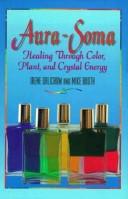 Aura-SomaIrene Dalichow, Mike Booth · 1995
 Colour healingMary Anderson · 1975
- 📕Gem therapyBenoytosh Bhattacharyya · 1958
Ranked by number of editions on Open Library, a rough measure of how lasting a book is.
🔗 Related topics
- Color theory Color theory, or more specifically traditional color theory, is a historical body of knowledge describing the behavior of colors — namely in color mixing…
- Color wheel A color wheel or color circle is an abstract illustrative organization of color hues around a circle, which shows the relationships between primary colors…
- RYB color model RYB (an abbreviation of red–yellow–blue) is a subtractive color model used in art and applied design in which red, yellow, and blue pigments are considered…
- Subtractive color Subtractive color or subtractive color mixing predicts the spectral power distribution of light after it passes through successive layers of partially…
- List of colors by shade This is a list of colors sorted by shade. Red is any of a number of similar colors evoked by light, consisting predominantly of the longest wavelengths…
- Color mixing There are three types of color mixing models, depending on the relative brightness of the resultant mixture: additive, subtractive, and average. In these…
- Magenta Magenta is a purplish-pink color. On color wheels of the RGB and CMYK color models, it is located directly midway between blue and red. It is one of the…
- Cyan Cyan (/ˈsaɪ.ən, -æn/) is the color between blue and green on the visible spectrum of light. It is evoked by light with a predominant wavelength between…