Everything about Color theory
Principles to describe the practical behavior of colors

Color theory, or more specifically traditional color theory, is a historical body of knowledge describing the behavior of colors — namely in color mixing, color contrast effects, color harmony, color schemes and color symbolism. Color theory and color science both study color and its existence. Traditional color theory tends to be more subjective and have artistic applications, while color science tends to be more objective and have functional applications, such as in chemistry, astronomy or color reproduction. However, there is much intertwining between the two throughout history, and they tend to aid each other in their own evolutions. Wikipedia →
🧭 Start here: a 6-step reading path
- Read the overview: Color theoryA 5-minute orientation
- Skim a recent paper: Color appearance and the end of Hering’s Opponent-Colors TheoryInfluential work since 2022
- Pick up a classic book: Zur FarbenlehreThe most-reprinted book on the subject
- Read the landmark paper: Color measurement and color theory: II. Opponent-colors theoryCited 84 times
- Go sideways: Subtractive colorA closely related topic
- Go sideways: Secondary colorA closely related topic
📖 Definitions
No dictionary entry for this exact phrase.
🗂️ The subject at a glance
🏆 Landmark papers (most cited)
Color measurement and color theory: II. Opponent-colors theory
Color Defect and Color Theory
Complementary colors theory of color vision: Physiology, color mixture, color constancy and color perception
Color Homography: Theory and Applications
Theory of Color Vision
A Theory of Color Vision.
Color symmetry and group theory
Color theory and design
🆕 Influential since 2022
Color appearance and the end of Hering’s Opponent-Colors Theory
Engineering Curriculum Reform Based on Outcome-Based Education and Five-Color Psychology Theory
Theory to practice: Pleasure‐Arousal‐Dominance (PAD) theory for architectural color design
High color saturation and angle-insensitive ultrathin color filter based on effective medium theory
Quantum color image median filtering in the spatial domain: theory and experiment
📚 Books worth reading
 Zur FarbenlehreJohann Wolfgang von Goethe · 1810
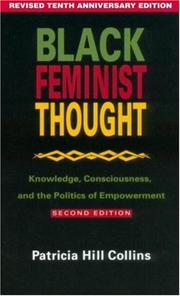 Black Feminist ThoughtPatricia Hill Collins · 1990
 Experiments and considerations touching coloursRobert Boyle · 1664
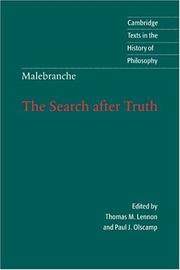 Recherche de la véritéNicolas Malebranche · 1688
 Pinta ratonesEllen Stoll Walsh · 1989
 Understanding colorLinda Holtzschue · 2008
 Four Colours SufficeRobin J. Wilson · 2002
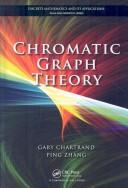 Chromatic graph theoryGary Chartrand, Zhang, Ping · 2008
Ranked by number of editions on Open Library, a rough measure of how lasting a book is.
🔗 Related topics
- Subtractive color Subtractive color or subtractive color mixing predicts the spectral power distribution of light after it passes through successive layers of partially…
- Secondary color A secondary color is a color made by mixing two primary colors of a given color model in even proportions. Combining one secondary color and a primary…
- Complementary colors Complementary colors are pairs of colors which, when combined or mixed, cancel each other out (lose chroma) by producing a grayscale color like white or…
- Color wheel A color wheel or color circle is an abstract illustrative organization of color hues around a circle, which shows the relationships between primary colors…
- Color mixing There are three types of color mixing models, depending on the relative brightness of the resultant mixture: additive, subtractive, and average. In these…
- RYB color model RYB (an abbreviation of red–yellow–blue) is a subtractive color model used in art and applied design in which red, yellow, and blue pigments are considered…
- List of colors by shade This is a list of colors sorted by shade. Red is any of a number of similar colors evoked by light, consisting predominantly of the longest wavelengths…
- Primary color Primary colors are colorants or colored lights that can be mixed in varying amounts to produce a gamut of colors. This is the essential method used to…