Live briefing

Everything about Code 93
Barcode symbology
Code 93 is a barcode symbology designed in 1982 by Intermec to provide a higher density and data security enhancement to Code 39. It is an alphanumeric, variable length symbology. Code 93 is used primarily by Canada Post to encode supplementary delivery information. Every symbol includes two check characters. Wikipedia →
🧭 Start here: a 6-step reading path
- Read the overview: Code 93A 5-minute orientation
- Skim a recent paper: Suppressing quantum errors by scaling a surface code logical qubitInfluential work since 2022
- Pick up a classic book: BushidōThe most-reprinted book on the subject
- Read the landmark paper: Backpropagation Applied to Handwritten Zip Code RecognitionCited 9,944 times
- Go sideways: Code 128A closely related topic
- Go sideways: Code 39A closely related topic
📖 Definitions
No dictionary entry for this exact phrase.
🗂️ The subject at a glance
🏆 Landmark papers (most cited)
Backpropagation Applied to Handwritten Zip Code Recognition
First-principles simulation: ideas, illustrations and the CASTEP code
A decimal code for the growth stages of cereals
VASPKIT: A user-friendly interface facilitating high-throughput computing and analysis using VASP code
Translating the Histone Code
BoltzTraP. A code for calculating band-structure dependent quantities
The cosmological simulation code gadget-2
Space-time codes for high data rate wireless communication: performance criterion and code construction
🆕 Influential since 2022
Suppressing quantum errors by scaling a surface code logical qubit
Competition-level code generation with AlphaCode
Quantum error correction below the surface code threshold
Realizing repeated quantum error correction in a distance-three surface code
Quantum logic with spin qubits crossing the surface code threshold
📚 Books worth reading
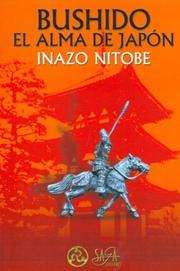 BushidōInazo Nitobe, Stefano Daniel · 1899
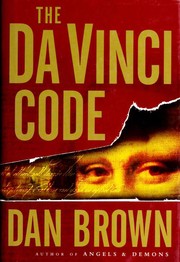 The Da Vinci CodeDan Brown · 2003
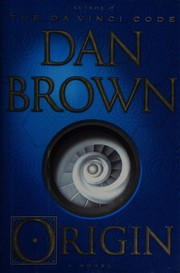 OriginDan Brown · 2013
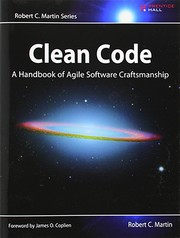 Clean CodeRobert C. Martin · 2008
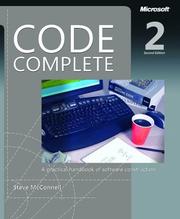 Code CompleteSteve McConnell · 1993
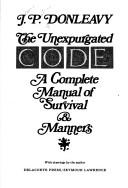 The Unexpurgated CodeJ. P. Donleavy · 1975
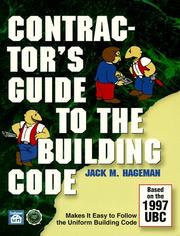 Contractor's guide to the building codeJack M. Hageman · 1983
- 📕National Building Code of the PhilippinesPhilippines. · 1983
Ranked by number of editions on Open Library, a rough measure of how lasting a book is.
🔗 Related topics
- Code 128 Code 128 is a high-density linear barcode symbology defined in ISO/IEC 15417:2007. It is used for alphanumeric or numeric-only barcodes. It can encode…
- Code 39 Code 39 (also known as Alpha39, Code 3 of 9, Code 3/9, Type 39, USS Code 39, or USD-3) is a variable length, discrete barcode symbology defined in ISO/IEC…
- Codabar Codabar is a linear barcode symbology developed in 1972 by Pitney Bowes Corp. It and its variants are also known as Codeabar, Ames Code, NW-7, Monarch…
- Code 11 Code 11 is a barcode symbology developed by Intermec in 1977, and it is used primarily in telecommunications. The symbol can encode any length string consisting…
- Universal Product Code The Universal Product Code (UPC or UPC code) is a barcode symbology that is used worldwide for tracking trade items in stores. The chosen symbology has…
- Telepen Telepen is a name of the barcode symbology designed to encode all 128 ASCII characters without using shift characters for code switching, and only using…
- PDF417 PDF417 is a stacked linear barcode format used in a variety of applications such as transport, identification cards, and inventory management. "PDF" stands…
- Interleaved 2 of 5 Interleaved 2 of 5 (ITF) is a continuous two-width barcode symbology encoding digits. It is used commercially on 135 film, for ITF-14 barcodes, and on…