Live briefing

Everything about Code 11
Barcode symbology
Code 11 is a barcode symbology developed by Intermec in 1977, and it is used primarily in telecommunications. The symbol can encode any length string consisting of the digits 0–9 and the dash character (-). A twelfth code represents the start/stop character, commonly printed as "*". One or two modulo-11 check digit(s) can be included. Wikipedia →
🧭 Start here: a 6-step reading path
- Read the overview: Code 11A 5-minute orientation
- Skim a recent paper: Suppressing quantum errors by scaling a surface code logical qubitInfluential work since 2022
- Pick up a classic book: The Da Vinci CodeThe most-reprinted book on the subject
- Read the landmark paper: Backpropagation Applied to Handwritten Zip Code RecognitionCited 9,944 times
- Go sideways: Code 39A closely related topic
- Go sideways: CodabarA closely related topic
📖 Definitions
No dictionary entry for this exact phrase.
🗂️ The subject at a glance
No outline available.
🏆 Landmark papers (most cited)
Backpropagation Applied to Handwritten Zip Code Recognition
First-principles simulation: ideas, illustrations and the CASTEP code
A decimal code for the growth stages of cereals
VASPKIT: A user-friendly interface facilitating high-throughput computing and analysis using VASP code
Translating the Histone Code
BoltzTraP. A code for calculating band-structure dependent quantities
The cosmological simulation code gadget-2
Space-time codes for high data rate wireless communication: performance criterion and code construction
🆕 Influential since 2022
Suppressing quantum errors by scaling a surface code logical qubit
Competition-level code generation with AlphaCode
Quantum error correction below the surface code threshold
Realizing repeated quantum error correction in a distance-three surface code
Quantum logic with spin qubits crossing the surface code threshold
📚 Books worth reading
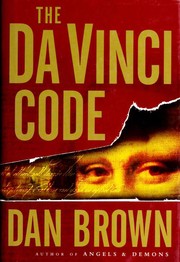 The Da Vinci CodeDan Brown · 2003
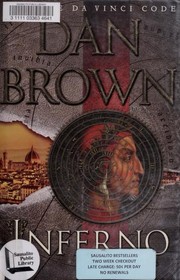 InfernoDan Brown · 2013
 Roller GirlVictoria Jamieson · 2014
 Aristotle and Dante discover the secrets of the universeBenjamin Alire Sáenz · 2012
 Nothing but the TruthAvi · 1991
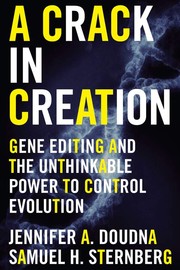 A Crack in CreationJennifer A. Doudna, Samuel H. Sternberg · 2017
 A Law Book for the DiasporaJohn Van Seters · 2002
 MLA style manual and guide to scholarly publishingJoseph Gibaldi · 1998
Ranked by number of editions on Open Library, a rough measure of how lasting a book is.
🔗 Related topics
- Code 39 Code 39 (also known as Alpha39, Code 3 of 9, Code 3/9, Type 39, USS Code 39, or USD-3) is a variable length, discrete barcode symbology defined in ISO/IEC…
- Codabar Codabar is a linear barcode symbology developed in 1972 by Pitney Bowes Corp. It and its variants are also known as Codeabar, Ames Code, NW-7, Monarch…
- Code 128 Code 128 is a high-density linear barcode symbology defined in ISO/IEC 15417:2007. It is used for alphanumeric or numeric-only barcodes. It can encode…
- Matrix 2 of 5 Matrix 2 of 5 (also known as Code 2 of 5 Matrix.) is a variable length, discrete, two width symbology. Matrix 2 of 5 is a subset of two-out-of-five codes…
- Telepen Telepen is a name of the barcode symbology designed to encode all 128 ASCII characters without using shift characters for code switching, and only using…
- Industrial 2 of 5 Industrial 2 of 5. (also known as Standard 2 of 5) is a variable length, discrete, two width symbology. Industrial 2 of 5 is a subset of two-out-of-five…
- Universal Product Code The Universal Product Code (UPC or UPC code) is a barcode symbology that is used worldwide for tracking trade items in stores. The chosen symbology has…
- PDF417 PDF417 is a stacked linear barcode format used in a variety of applications such as transport, identification cards, and inventory management. "PDF" stands…