Live briefing
Everything about Classical genetics
Branch of genetics
Classical genetics is the branch of genetics based solely on visible results of reproductive acts. It is the oldest discipline in the field of genetics, going back to the experiments on Mendelian inheritance by Gregor Mendel who made it possible to identify the basic mechanisms of heredity. Subsequently, these mechanisms have been studied and explained at the molecular level. Wikipedia →
🧭 Start here: a 6-step reading path
- Read the overview: Classical geneticsA 5-minute orientation
- Skim a recent paper: Artificial Intelligence and Classical Methods in Animal Genetics and BreedingInfluential work since 2022
- Pick up a classic book: Brave New WorldThe most-reprinted book on the subject
- Read the landmark paper: The Gene Balance Hypothesis: From Classical Genetics to Modern GenomicsCited 410 times
- Go sideways: Mendelian inheritanceA closely related topic
- Go sideways: GenotypeA closely related topic
📖 Definitions
No dictionary entry for this exact phrase.
🗂️ The subject at a glance
🏆 Landmark papers (most cited)
The Gene Balance Hypothesis: From Classical Genetics to Modern Genomics
Classical and Molecular Genetics of the Model Legume Lotus japonicus
Yeast genetics and the fall of the classical view of meiosis
Problem solving and classical genetics: Successful versus unsuccessful performance
Using Genomic Sequencing for Classical Genetics in E. coli K12
CLASSICAL AND MOLECULAR GENETICS OF TOMATO: HIGHLIGHTS AND PERSPECTIVES
Gustave Malécot and the transition from classical to modern population genetics.
Classical and molecular genetics of Bremia lactucae, cause of lettuce downy mildew
🆕 Influential since 2022
Artificial Intelligence and Classical Methods in Animal Genetics and Breeding
Renewing Lost Genetic Variability with a Classical Yeast Genetics Approach
Decoding mosquito–virus interactions: from classical genetics to multi-omics
Development of reassortant influenza vaccines: classical reassortment or reverse genetics?
Scientific explanation as ampliative, specialized embedding: the case of classical genetics
📚 Books worth reading
 Brave New WorldAldous Huxley · 1932
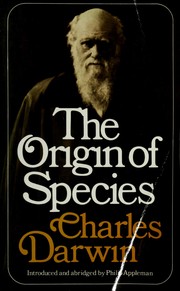 On the origin of species by means of natural selectionCharles Darwin · 1859
 Bad SeedWilliam March · 1954
 Our debt to antiquityTadeusz Zieliński · 1909
 Ernst Mach's Vienna 1895-1930J. Blackmore · 2001
- 📕Harmonic AnalysisPalle E. T. Jorgensen · 2018
- 📕Un mundo felizAldous Huxley
Ranked by number of editions on Open Library, a rough measure of how lasting a book is.
🔗 Related topics
- Mendelian inheritance Mendelian inheritance (sometimes referred to as Mendelism) is a type of biological inheritance following the principles originally proposed by Gregor Mendel…
- Genotype The genotype of an organism is its complete set of genetic material. Genotype can also be used to refer to the alleles or variants an individual carries…
- Test cross Under the law of dominance in genetics, an individual expressing a dominant phenotype could contain either two copies of the dominant allele (homozygous…
- Dominance (genetics) In genetics, dominance is the phenomenon of one variant (allele) of a gene on a chromosome masking or overriding the effect of a different variant of the…
- Monohybrid cross A monohybrid cross is a cross between two organisms with different variations at one genetic locus of interest. The character(s) being studied in a monohybrid…
- Allele An allele (UK: /ˈæliːl, əˈliːl/) is a variant of the sequence of nucleotides at a particular location, or locus, on a DNA molecule. Alleles can differ…
- Punnett square The Punnett square is a square diagram that is used to predict the genotypes of a particular cross or breeding experiment. It is named after Reginald C…
- Heredity Heredity, also called inheritance or biological inheritance, is the passing on of genetic information from parents to their offspring. It may occur through…