Everything about Cellular Message Encryption Algorithm
Block cipher
In cryptography, the Cellular Message Encryption Algorithm (CMEA) is a block cipher which was used for securing mobile phones in the United States. CMEA is one of four cryptographic primitives specified in a Telecommunications Industry Association (TIA) standard, and is designed to encrypt the control channel, rather than the voice data. In 1997, a group of cryptographers published attacks on the cipher showing it had several weaknesses which give it a trivial effective strength of a 24-bit to 32-bit cipher. Some accusations were made that the NSA had pressured the original designers into crippling CMEA, but the NSA has denied any role in the design or selection of the algorithm. The ECMEA and SCEMA ciphers are derived from CMEA. Wikipedia →
🧭 Start here: a 6-step reading path
- Read the overview: Cellular Message Encryption AlgorithmA 5-minute orientation
- Pick up a classic book: Computer networkingThe most-reprinted book on the subject
- Go sideways: Block cipherA closely related topic
- Go sideways: Data Encryption StandardA closely related topic
📖 Definitions
No dictionary entry for this exact phrase.
🗂️ The subject at a glance
No outline available.
🏆 Landmark papers (most cited)
- No matching papers found.
📚 Books worth reading
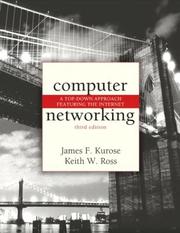 Computer networkingJames F. Kurose, Keith W. Ross · 1900
 Data Communications and NetworkingBehrouz A. Forouzan, Catherine Ann Coombs · 2000
 Computer Networks & Communications (NetCom)Nabendu Chaki · 2013
 New Perspectives Computer Concepts 2016 Enhanced, ComprehensiveJune Jamrich Parsons · 2016
- 📕Tech15projects.com · 2014
Ranked by number of editions on Open Library, a rough measure of how lasting a book is.
🔗 Related topics
- Block cipher In cryptography, a block cipher is a deterministic algorithm that operates on fixed-length groups of bits, called blocks. Block ciphers are the elementary…
- Data Encryption Standard The Data Encryption Standard (DES /ˌdiːˌiːˈɛs, dɛz/) is a symmetric-key algorithm for the encryption of digital data. Although its short key length of…
- Khufu and Khafre In cryptography, Khufu and Khafre are two block ciphers designed by Ralph Merkle in 1989 while working at Xerox's Palo Alto Research Center. Along with…
- DES-X In cryptography, DES-X (or DESX) is a variant on the DES (Data Encryption Standard) symmetric-key block cipher intended to increase the complexity of a…
- Advanced Encryption Standard The Advanced Encryption Standard (AES), occasionally still referred to by its original name, Rijndael (Dutch pronunciation: [ˈrɛindaːl], RAIN-dahl), is…
- Outline of cryptography The following outline is provided as an overview of and topical guide to cryptography: Cryptography (or cryptology) – practice and study of hiding information…
- REDOC In cryptography, REDOC II and REDOC III are block ciphers designed by cryptographer Michael Wood for Cryptech Inc and are optimised for use in software…
- Ciphertext In cryptography, ciphertext or cyphertext is the result of encryption performed on plaintext using an algorithm, called a cipher. Ciphertext is also known…