Live briefing

Everything about Cell cycle
Events leading to cell division
The cell cycle, or cell-division cycle, is the sequence of events that take place in a cell and lead to its division into two daughter cells. These events include the growth of the cell, duplication of its DNA and some of its organelles, and subsequently the partitioning of its cytoplasm, chromosomes and other components into two daughter cells in a process called cell division. Wikipedia →
🧭 Start here: a 6-step reading path
- Read the overview: Cell cycleA 5-minute orientation
- Skim a recent paper: Copper induces cell death by targeting lipoylated TCA cycle proteinsInfluential work since 2022
- Pick up a classic book: Progress in cell cycle researchThe most-reprinted book on the subject
- Read the landmark paper: Animal Cell CycleCited 540 times
- Go sideways: G1/S transitionA closely related topic
- Go sideways: Cell cycle checkpointA closely related topic
📖 Definitions
Noun The life cycle of eukaryotic cells from a quiescent beginning, growth, duplication of DNA followed by mitosis and division.
🏆 Landmark papers (most cited)
Animal Cell Cycle
Cell Cycle Progression
The Cell Cycle
Cell Cycle Development
The Cell Cycle
Cell Cycle Control
CELL CYCLE MUTANTS
Cell-cycle regulation
🆕 Influential since 2022
📚 Books worth reading
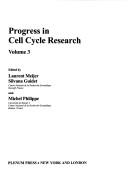 Progress in cell cycle researchLaurent Meijer, Silvana Guidet · 1997
 Gadd45 Stress Sensor GenesDan A. Liebermann, Barbara Hoffman · 2013
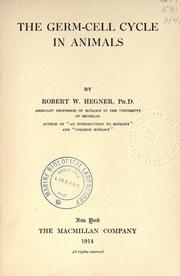 The germ-cell cycle in animalsHegner, Robert William · 1914
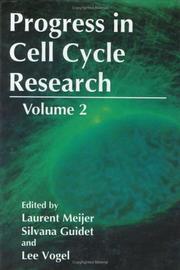 Progress in cell cycle researchLaurent Meijer, Lee Vogel · 1996
 Eukaryotic Cell CycleBryant/Franis · 2008
- 📕Functional study of Polo-like Kinase 1 in cancer and normal nontransformed cellsMing Lei · 2008
 Cell growthClaudio A. Nicolini · 1982
 Cell cycle in developmentJacek Z. Kubiak · 2011
Ranked by number of editions on Open Library, a rough measure of how lasting a book is.
🔗 Related topics
- G1/S transition The G1/S transition is a stage in the cell cycle at the boundary between the G1 phase, in which the cell grows, and the S phase, during which DNA is replicated…
- Cell cycle checkpoint Cell cycle checkpoints are control mechanisms in the eukaryotic cell cycle which ensure its proper progression. Each checkpoint serves as a potential terminatio…
- Restriction point The restriction point (R), also known as the Start or G1/S checkpoint, is a cell cycle checkpoint in the G1 phase of the animal cell cycle at which the…
- Cyclin A Cyclin A is a member of the cyclin family, a group of proteins that function in regulating progression through the cell cycle. The stages that a cell passes…
- Cyclin E/Cdk2 The Cyclin E/Cdk2 complex is a structure composed of two proteins, cyclin E and cyclin-dependent kinase 2 (Cdk2). Similar to other cyclin/Cdk complexes…
- Cyclin-dependent kinase 4 Cyclin-dependent kinase 4 (CDK4), also known as cell division protein kinase 4, is an enzyme that is encoded by the CDK4 gene in humans. CDK4 is a member…
- E2F E2F is a group of genes that encodes a family of transcription factors (TF) in higher eukaryotes. Three of them are activators: E2F1, 2 and E2F3a. Six…
- S phase S phase (Synthesis phase) is the phase of the cell cycle in which DNA is replicated, occurring between G1 phase and G2 phase. Since accurate duplication…