Live briefing

Everything about Berkeley algorithm
Method of clock synchronisation
The Berkeley algorithm is a method of clock synchronisation in distributed computing which assumes no machine has an accurate time source. It was developed by Gusella and Zatti at the University of California, Berkeley in 1989. Like Cristian's algorithm, it is intended for use within intranets. Wikipedia →
🧭 Start here: a 6-step reading path
- Read the overview: Berkeley algorithmA 5-minute orientation
- Skim a recent paper: SINCPOINT A PROPOSAL FOR A DIDACTIC TOOL TO TEACH CLOCK SYNCHRONIZATION IN DISTRIBUTED SYSTEMS USING THE BERKELEY ALGORITHMInfluential work since 2022
- Pick up a classic book: Computer NetworksThe most-reprinted book on the subject
- Go sideways: TimedA closely related topic
- Go sideways: Cristian's algorithmA closely related topic
📖 Definitions
No dictionary entry for this exact phrase.
🗂️ The subject at a glance
🏆 Landmark papers (most cited)
- No matching papers found.
🆕 Influential since 2022
📚 Books worth reading
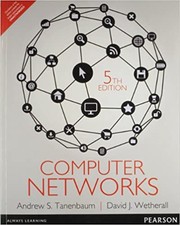 Computer NetworksAndrew S. Tanenbaum, John David Wetherall · 1981
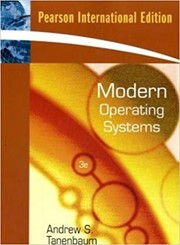 Modern Operating SystemsAndrew S. Tanenbaum, Herbert Bos · 1992
 Approximation, Randomization, and Combinatorial Optimization. Algorithms and TechniquesPrasad Raghavendra, Sofya Raskhodnikova · 2003
 An introduction to computer scienceJean-Paul Tremblay, Richard B. Bunt · 1979
 Algorithms for Computational BiologyAdrian-Horia Dediu, Carlos Martín-Vide · 2014
 Algorithms and classification in combinatorial group theoryGilbert Baumslag, C. F. Miller · 1992
- 📕Approximation, randomization, and combinatorial optimizationInternational Workshop on Approximation Algorithms for Combinatorial Optimization Problems (4th 2001 Berkeley, Calif.) · 2001
 Information HidingMatthias Kirchner · 2013
Ranked by number of editions on Open Library, a rough measure of how lasting a book is.
🔗 Related topics
- Timed timed (time daemon) is an operating system program that maintains the system time in synchronization with time servers using the Time Synchronization Protocol…
- Cristian's algorithm Cristian's algorithm (introduced by Flaviu Cristian in 1989) is a method for clock synchronization which can be used in many fields of distributive computer…
- Clock synchronization In computer science and electrical engineering, clock synchronization is a technique for coordinating multiple independent electronic clock signals. All…
- Precision Time Protocol The Precision Time Protocol (PTP) is a protocol for clock synchronization throughout a computer network with relatively high precision as compared to using…
- Consensus (computer science) A fundamental problem in distributed computing and multi-agent systems is to achieve overall system reliability in the presence of a number of faulty processes…
- Round-trip delay In telecommunications, round-trip delay (RTD) or round-trip time (RTT) is the amount of time it takes for a signal to be sent plus the amount of time it…
- TCP Vegas TCP Vegas is a TCP congestion avoidance algorithm that emphasizes packet delay, rather than packet loss, as a signal to help determine the rate at which…
- Random neural network A random neural network (RNN) is a mathematical representation of an interconnected network of neurons or cells which exchange spiking signals. It was…