Everything about Random neural network
Network of neurons with spiking signals
A random neural network (RNN) is a mathematical representation of an interconnected network of neurons or cells which exchange spiking signals. It was invented by Erol Gelenbe and is linked to the G-network model of queueing networks which Erol Gelenbe also invented, and with his Gene Regulatory Network models. In this model, each neuronal cell state is represented by an integer whose value rises when the cell receives an excitatory spike and drops when it receives an inhibitory spike. The spikes can originate outside the network itself, or they can come from other cells in the networks. Cells whose internal excitatory state has a positive value are allowed to send out spikes of either kind to other cells in the network according to specific cell-dependent spiking rates. The model has a mathematical solution in steady-state which provides the joint probability distribution of the network in terms of the individual probabilities that each cell is excited and able to send out spikes. Computing this solution is based on solving a set of non-linear algebraic equations whose parameters are related to the spiking rates of individual cells and their connectivity to other cells, as well as the arrival rates of spikes from outside the network. The RNN is a recurrent model, i.e. a neural network that is allowed to have complex feedback loops. Wikipedia →
🧭 Start here: a 6-step reading path
- Read the overview: Random neural networkA 5-minute orientation
- Skim a recent paper: Ensemble Deep Random Vector Functional Link Neural Network for RegressionInfluential work since 2022
- Pick up a classic book: Photonics for processors, neural networks, and memoriesThe most-reprinted book on the subject
- Read the landmark paper: Learning in the Recurrent Random Neural NetworkCited 303 times
- Go sideways: Erol GelenbeA closely related topic
- Go sideways: Spiking neural networkA closely related topic
📖 Definitions
Noun A mathematical representation of an interconnected network of neurons or cells which exchange spiking signals.
🗂️ The subject at a glance
🏆 Landmark papers (most cited)
Learning in the Recurrent Random Neural Network
Stability of the Random Neural Network Model
Fast decorrelated neural network ensembles with random weights
Learning in the multiple class random neural network
The Random Neural Network: A Survey
THE RANDOM NEURAL NETWORK MODEL FOR TEXTURE GENERATION
Novel Random k Satisfiability for in Hopfield Neural Network
Feed forward neural network with random quaternionic neurons
🆕 Influential since 2022
Ensemble Deep Random Vector Functional Link Neural Network for Regression
Random vibration analysis of vibro-impact systems: RBF neural network method
Seismic Random Noise Attenuation by Applying Multiscale Denoising Convolutional Neural Network
Rare-event Simulation for Neural Network and Random Forest Predictors
IoT Network Cybersecurity Assessment With the Associated Random Neural Network
📚 Books worth reading
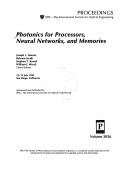 Photonics for processors, neural networks, and memoriesJoseph L. Horner · 1993
 Neural, Morphological and Stochastic Methods in Image and Signal ProcessingEdward R. Dougherty, SPIE · 1995
Ranked by number of editions on Open Library, a rough measure of how lasting a book is.
🔗 Related topics
- Erol Gelenbe Sami Erol Gelenbe (born 22 August 1945, Istanbul) is a Turkish and French computer scientist, electronic engineer and applied mathematician, known for…
- Spiking neural network Spiking neural networks (SNNs) are artificial neural networks (ANN) that mimic natural neural networks. These models leverage timing of discrete spikes…
- Product-form solution In probability theory, a product-form solution is a particularly efficient form of solution for determining some metric of a system with distinct sub-components…
- Echo state network An echo state network (ESN) is a type of reservoir computer that uses a recurrent neural network with a sparsely connected hidden layer (with typically…
- G-network In queueing theory, a discipline within the mathematical theory of probability, a G-network (generalized queueing network, often called a Gelenbe network)…
- Recurrent neural network In artificial neural networks, recurrent neural networks (RNNs) are designed for processing sequential data, such as text, speech, and time series, where…
- Types of artificial neural networks Types of neural networks (NN) include a family of techniques. The simplest types have static components, including number of units, number of layers, unit…
- Computational neurogenetic modeling Computational neurogenetic modeling (CNGM) is concerned with the study and development of dynamic neuronal models for modeling brain functions with respect…