Everything about Accelerator physics
Physics related to the study, design, building and operation of particle accelerators

Accelerator physics is a branch of applied physics concerned with the physical principles governing the acceleration and controlled motion of charged particles and the dynamics of particle beams in particle accelerators. It encompasses the study of particle motion, manipulation and measurement, and the interactions of charged particle beams with electromagnetic fields and accelerator structures. Its theoretical foundations draw on classical mechanics, special relativity, electromagnetism and statistical mechanics, and include the study of both individual particle dynamics and the collective behaviour of beams. Wikipedia →
🧭 Start here: a 6-step reading path
- Read the overview: Accelerator physicsA 5-minute orientation
- Skim a recent paper: AAPM Medical Physics Practice Guideline 8.b: Linear accelerator performance testsInfluential work since 2022
- Pick up a classic book: The God particleThe most-reprinted book on the subject
- Read the landmark paper: Physics of laser-driven plasma-based electron acceleratorsCited 2,456 times
- Go sideways: Particle acceleratorA closely related topic
- Go sideways: Alexander Wu ChaoA closely related topic
📖 Definitions
No dictionary entry for this exact phrase.
🏆 Landmark papers (most cited)
Physics of laser-driven plasma-based electron accelerators
Bayesian optimization algorithms for accelerator physics
Physics design of an accelerator for an accelerator-driven subcritical system
Physics of a Rare Isotope Accelerator
Accelerator physics at LEP
Physics and Accelerator Applications of RF Superconductivity
Updated physics design ITER-SINGAP accelerator
Nonlinear Problems in Accelerator Physics
🆕 Influential since 2022
AAPM Medical Physics Practice Guideline 8.b: Linear accelerator performance tests
Bridging the gap between machine learning and particle accelerator physics with high-speed, differentiable simulations
NICA heavy-ion collider at JINR (Dubna). Status of accelerator complex and first physics at NICA.
Geant4 simulation model of electromagnetic processes in oriented crystals for accelerator physics
Beam physics studies for a high charge and high beam quality laser-plasma accelerator
📚 Books worth reading
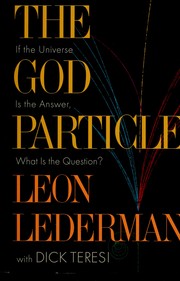 The God particleLeon M. Lederman, Dick Teresi · 1993
 Mine for keepsJean Little · 1962
 Science and Technology of Particle AcceleratorsRob Appleby, Graeme Burt · 2020
 Particle Accelerator PhysicsHelmut Wiedemann · 2001
 Handbook of accelerator physics and engineeringAlexander Wu Chao · 1999
- 📕Accelerators in the universeKEK Cosmophysics Group Inaugural Conference (2008 Tusukuba-shi, Japan) · 2008
- 📕Superconducting Super ColliderUnited States. Congress. House. Committee on Science, Space, and Technology. · 1988
 Particle penetration and radiation effectsPeter Sigmund · 2006
Ranked by number of editions on Open Library, a rough measure of how lasting a book is.
🔗 Related topics
- Particle accelerator A particle accelerator is a machine that uses electromagnetic fields to propel ions to very high speeds and energies to contain them in well-defined beams…
- Alexander Wu Chao Alexander Wu Chao (born July 2, 1949) is a Taiwanese-American physicist, specializing in accelerator physics. Chao was born in Taiwan. He graduated in…
- Linear particle accelerator A linear particle accelerator (often shortened to linac) is a type of particle accelerator that accelerates charged subatomic particles or ions to a high…
- Synchrotron A synchrotron is a particular type of cyclic particle accelerator, descended from the cyclotron, in which the accelerating particle beam travels around…
- Cyclotron A cyclotron is a type of particle accelerator invented by Ernest Lawrence in 1929–1930 at the University of California, Berkeley, and patented in 1932…
- Super Proton–Antiproton Synchrotron The Super Proton–Antiproton Synchrotron (or SppS, also known as the Proton–Antiproton Collider) was a particle accelerator that operated at CERN from 1981…
- Stochastic cooling Stochastic cooling is a form of particle-beam cooling. It is used in some particle accelerators and storage rings to control the emittance of the particle…
- Electron gun An electron gun (also called electron emitter) is an electrical component in some vacuum tubes that produces a narrow, collimated electron beam that has…