Everything about Particle accelerator
Research apparatus for particle physics

A particle accelerator is a machine that uses electromagnetic fields to propel ions to very high speeds and energies to contain them in well-defined beams. Small accelerators are used for fundamental research in particle physics. Accelerators are also used as synchrotron light sources for the study of condensed matter physics. Smaller particle accelerators are used in a wide variety of applications, including particle therapy for oncological purposes, radioisotope production for medical diagnostics, ion implanters for the manufacture of semiconductors, and accelerator mass spectrometers for measurements of rare isotopes such as radiocarbon. Wikipedia →
🧭 Start here: a 6-step reading path
- Read the overview: Particle acceleratorA 5-minute orientation
- Skim a recent paper: Reinforcement learning-trained optimisers and Bayesian optimisation for online particle accelerator tuningInfluential work since 2022
- Pick up a classic book: The God particleThe most-reprinted book on the subject
- Read the landmark paper: Self-Organizing Hierarchical Particle Swarm Optimizer With Time-Varying Acceleration CoefficientsCited 2,627 times
- Go sideways: SynchrotronA closely related topic
- Go sideways: Proton SynchrotronA closely related topic
📖 Definitions
Noun A device that accelerates electrically charged particles to extremely high speeds, for the purpose of inducing high energy reactions or producing high energy radiation.
🏆 Landmark papers (most cited)
Self-Organizing Hierarchical Particle Swarm Optimizer With Time-Varying Acceleration Coefficients
The Particle Accelerator Simulation Code PyORBIT
Model-independent particle accelerator tuning
On White Holes as Particle Accelerator
Superconducting Materials for Particle Accelerator Magnets
List of particle accelerator installations
Particle Dynamics in the Linear Accelerator
Particle accelerator physics
🆕 Influential since 2022
Reinforcement learning-trained optimisers and Bayesian optimisation for online particle accelerator tuning
The supernova remnant SN 1006 as a Galactic particle accelerator
Extremum Seeking-Based Control System for Particle Accelerator Beam Loss Minimization
Metal additive manufacturing for particle accelerator applications
Quantum Fuzzy Inference Engine for Particle Accelerator Control
📚 Books worth reading
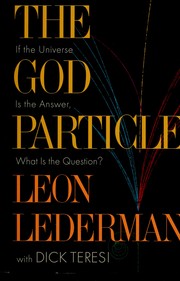 The God particleLeon M. Lederman, Dick Teresi · 1993
 Science and Technology of Particle AcceleratorsRob Appleby, Graeme Burt · 2020
 Particle Accelerator PhysicsHelmut Wiedemann · 2001
- 📕Accelerators in the universeKEK Cosmophysics Group Inaugural Conference (2008 Tusukuba-shi, Japan) · 2008
 Tales from the LoopSimon Stålenhag · 2015
 Handbook of accelerator physics and engineeringAlexander Wu Chao · 1999
 Synchrotron Light Sources and Free-Electron LasersEberhard J. Jaeschke, Shaukat Khan · 2016
 Particle penetration and radiation effectsPeter Sigmund · 2006
Ranked by number of editions on Open Library, a rough measure of how lasting a book is.
🔗 Related topics
- Synchrotron A synchrotron is a particular type of cyclic particle accelerator, descended from the cyclotron, in which the accelerating particle beam travels around…
- Proton Synchrotron The Proton Synchrotron (PS, sometimes also referred to as CPS) is a particle accelerator at CERN. It is CERN's first synchrotron, beginning its operation…
- Particle beam A particle beam is a stream of charged or neutral particles other than photons. In particle accelerators, these particles can move with a velocity close…
- Linear particle accelerator A linear particle accelerator (often shortened to linac) is a type of particle accelerator that accelerates charged subatomic particles or ions to a high…
- Cyclotron A cyclotron is a type of particle accelerator invented by Ernest Lawrence in 1929–1930 at the University of California, Berkeley, and patented in 1932…
- Energy recovery linac An energy recovery linac (ERL) is a type of linear particle accelerator that provides a beam of electrons used to produce x-rays by synchrotron radiation…
- AWAKE The AWAKE (Advanced WAKEfield Experiment) facility at CERN is a proof-of-principle experiment, which investigates wakefield plasma acceleration using a…
- Fixed-field alternating gradient accelerator A Fixed-Field alternating gradient Accelerator (FFA; also abbreviated FFAG) is a circular particle accelerator concept that can be characterized by its…