Live briefing
Everything about 8-bit computing
Computer architecture bit width
In computer architecture, 8-bit integers or other data units are those that are eight bits wide. Also, 8-bit central processing unit (CPU) and arithmetic logic unit (ALU) architectures are those that are based on registers of that size or data buses of that width. Memory addresses for 8-bit CPUs are generally larger than 8-bit, usually sixteen-bit. 8-bit microcomputers are microcomputers that use 8-bit microprocessors. Wikipedia →
🧭 Start here: a 6-step reading path
- Read the overview: 8-bit computingA 5-minute orientation
- Skim a recent paper: The future of quantum computing with superconducting qubitsInfluential work since 2022
- Pick up a classic book: Diary of an 8-Bit Warrior #6The most-reprinted book on the subject
- Read the landmark paper: Linear optical quantum computing with photonic qubitsCited 2,576 times
- Go sideways: Motorola 6809A closely related topic
- Go sideways: RAM limitA closely related topic
📖 Definitions
No dictionary entry for this exact phrase.
🗂️ The subject at a glance
🏆 Landmark papers (most cited)
Linear optical quantum computing with photonic qubits
An arbitrary Lagrangian-Eulerian computing method for all flow speeds
A Programmable Heterogeneous Microprocessor Based on Bit-Scalable In-Memory Computing
Task Offloading in UAV-Aided Edge Computing: Bit Allocation and Trajectory Optimization
Computing local invariants of quantum-bit systems
Intracellular Entropy‐Driven Multi‐Bit DNA Computing for Tumor Progression Discrimination
Approaching five-bit NMR quantum computing
Bit-serial architecture for optical computing
🆕 Influential since 2022
The future of quantum computing with superconducting qubits
Implementation of convolutional neural network and 8-bit reservoir computing in CMOS compatible VRRAM
Precision of bit slicing with in-memory computing based on analog phase-change memory crossbars
A Fully Bit-Flexible Computation in Memory Macro Using Multi-Functional Computing Bit Cell and Embedded Input Sparsity Sensing
Implementation of 8-bit reservoir computing through volatile ZrOx-based memristor as a physical reservoir
📚 Books worth reading
 Diary of an 8-Bit Warrior #6Cube Kid · 2019
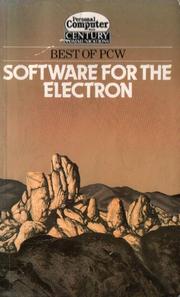 Software for the ElectronJane Bird · 1984
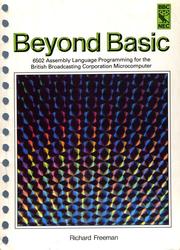 Beyond BASICRichard Freeman · 1983
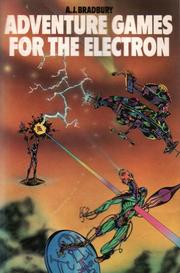 Adventure Games For The ElectronA. J. Bradbury · 1984
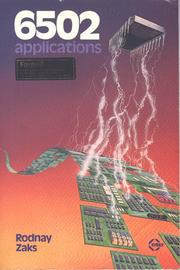 6502 applicationsRodney Zaks · 1979
 Me and My MicroPaul Shreeve · 1984
 Graphito Disk PackHALLAM · 1984
 The Electron User Guide · 1983
Ranked by number of editions on Open Library, a rough measure of how lasting a book is.
🔗 Related topics
- Motorola 6809 The Motorola 6809 ("sixty-eight-oh-nine") is an 8-bit microprocessor with some 16-bit features. It was designed by Motorola's Terry Ritter and Joel Boney…
- RAM limit The maximum random access memory (RAM) installed in any computer system is limited by hardware, software and economic factors. The hardware may have a…
- Zilog Z8000 The Zilog Z8000 is a 16-bit microprocessor architecture designed by Zilog and introduced in early 1979. Two chips were initially released, differing only…
- Motorola 6800 The 6800 ("sixty-eight hundred") is an 8-bit microprocessor designed and first manufactured by Motorola in 1974. The MC6800 microprocessor was part of…
- Zilog Z80 The Zilog Z80 is an 8-bit microprocessor designed by Zilog, first released in 1976; it played an important role in the evolution of early personal computing…
- 24-bit computing In computer architecture, 24-bit integers, memory addresses, or other data units are those that are 24 bits (3 octets) wide. Also, 24-bit central processing…
- Intersil 6100 The Intersil 6100, or IM6100, is a single-chip microprocessor implementation of the 12-bit PDP-8 instruction set, along with a range of peripheral support…
- Halt and Catch Fire (computing) In computer engineering, Halt and Catch Fire, known by the assembly language mnemonic HCF, is an idiom referring to a computer machine code instruction…