Live briefing
Everything about 24-bit computing
Computer architecture bit width
In computer architecture, 24-bit integers, memory addresses, or other data units are those that are 24 bits wide. Also, 24-bit central processing unit (CPU) and arithmetic logic unit (ALU) architectures are those that are based on registers, address buses, or data buses of that size. Wikipedia →
🧭 Start here: a 6-step reading path
- Read the overview: 24-bit computingA 5-minute orientation
- Skim a recent paper: The future of quantum computing with superconducting qubitsInfluential work since 2022
- Pick up a classic book: C How to ProgramThe most-reprinted book on the subject
- Read the landmark paper: Linear optical quantum computing with photonic qubitsCited 2,576 times
- Go sideways: 16-bit computingA closely related topic
- Go sideways: 8-bit computingA closely related topic
📖 Definitions
No dictionary entry for this exact phrase.
🗂️ The subject at a glance
🏆 Landmark papers (most cited)
Linear optical quantum computing with photonic qubits
An arbitrary Lagrangian-Eulerian computing method for all flow speeds
Computing local invariants of quantum-bit systems
Intracellular Entropy‐Driven Multi‐Bit DNA Computing for Tumor Progression Discrimination
Approaching five-bit NMR quantum computing
Bit-serial architecture for optical computing
Stripes: Bit-Serial Deep Neural Network Computing
BitMapper: an efficient all-mapper based on bit-vector computing
🆕 Influential since 2022
The future of quantum computing with superconducting qubits
Implementation of convolutional neural network and 8-bit reservoir computing in CMOS compatible VRRAM
A Fully Bit-Flexible Computation in Memory Macro Using Multi-Functional Computing Bit Cell and Embedded Input Sparsity Sensing
Computing One-Bit Compressive Sensing via Double-Sparsity Constrained Optimization
Big-PERCIVAL: Exploring the Native Use of 64-Bit Posit Arithmetic in Scientific Computing
📚 Books worth reading
 C How to ProgramPaul J. Deitel, Harvey M. Deitel · 2007
 Invitation to Computer ScienceG. Michael Schneider, Judith L. Gersting · 1995
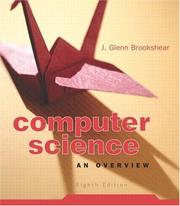 Computer scienceJ. Glenn Brookshear, Brookshear · 1985
 Microprocessor Architecture, Programming, and Applications with the 8085Ramesh S. Gaonkar · 1996
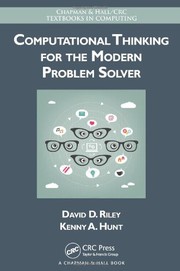 Computational Thinking for the Modern Problem SolverKenny A. Hunt, David D. Riley · 2014
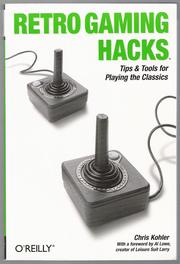 Retro Gaming HacksChris Kohler · 2005
 Spielkonsolen und Heim-ComputerWinnie Forster · 2003
 Classical and Quantum Information TheoryEmmanuel Desurvire · 2009
Ranked by number of editions on Open Library, a rough measure of how lasting a book is.
🔗 Related topics
- 16-bit computing In computer architecture, 16-bit integers, memory addresses, or other data units are those that are 16 bits (2 octets) wide. Also, 16-bit central processing…
- 8-bit computing In computer architecture, 8-bit integers or other data units are those that are eight bits wide (one octet). Also, 8-bit central processing unit (CPU)…
- 12-bit computing In computer architecture, 12-bit integers, memory addresses, or other data units are those that are 12 bits (1.5 octets) wide. Also, 12-bit central processing…
- 48-bit computing In computer architecture, 48-bit integers, memory addresses, or other data units are those that are 48 bits wide. Also, 48-bit central processing unit…
- 36-bit computing In computer architecture, 36-bit integers, memory addresses, or other data units are those that are 36 bits (six six-bit characters) wide. Also, 36-bit…
- Motorola 68020 The Motorola 68020 is a 32-bit microprocessor from Motorola, released in 1984. A lower-cost version was also made available, known as the 68EC020. In keeping…
- Bit slicing Bit slicing is a technique for constructing a processor from modules of processors of smaller bit width, for the purpose of increasing the word length;…
- Zilog Z80 The Zilog Z80 is an 8-bit microprocessor designed by Zilog, first released in 1976; it played an important role in the evolution of early personal computing…