Live briefing

Everything about Windows Home Server
Home server operating system by Microsoft released in 2007
Windows Home Server is a home server operating system from Microsoft. It was announced on 7 January 2007 at the Consumer Electronics Show by Bill Gates, released to manufacturing on 16 July 2007 and officially released on 4 November 2007. Wikipedia →
🧭 Start here: a 6-step reading path
- Read the overview: Windows Home ServerA 5-minute orientation
- Pick up a classic book: MCSEThe most-reprinted book on the subject
- Go sideways: Windows Vista I/O technologiesA closely related topic
- Go sideways: Shared resourceA closely related topic
📖 Definitions
No dictionary entry for this exact phrase.
🗂️ The subject at a glance
🏆 Landmark papers (most cited)
- No matching papers found.
📚 Books worth reading
 MCSELance Mortensen, Rick Sawtell · 1997
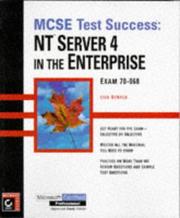 MCSE test successLisa Donald, Bruce Moran · 1997
 Microsoft Windows Home Server unleashedPaul McFedries · 2007
 Windows Home ServerR. Hallihan · 2008
 MCSE--NT Server 4Matthew Strebe, Charles Perkins · 1997
 MCSETodd Lammle, Monica Lammle · 1997
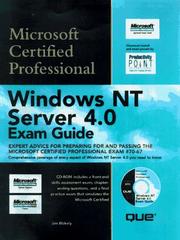 Microsoft certified systems engineerSteve Kaczmarek, Productivity Point International · 1997
 MCSE NT Server 4.0 study guideSyngress Media, Inc, Syngress Media Inc. · 1998
Ranked by number of editions on Open Library, a rough measure of how lasting a book is.
🔗 Related topics
- Windows Vista I/O technologies Windows Vista introduced a number of new I/O functions to the Microsoft Windows line of operating systems. They are intended to shorten the time taken…
- Shared resource In computing, a shared resource, or network share, is a computer resource made available from one host to other hosts on a computer network. It is a device…
- Diskless node A diskless node (or diskless workstation) is a workstation or personal computer without disk drives, which employs network booting to load its operating…
- NTBackup NTBackup (also known as Windows Backup and Backup Utility) is the first built-in backup utility of the Windows NT family. It was introduced with Windows…
- Single-instance storage Single-instance storage (SIS) is a system's ability to take multiple copies of content and replace them by a single shared copy. It is a means to eliminate…
- Management features new to Windows Vista Windows Vista contains a range of new technologies and features that are intended to help network administrators and power users better manage their systems…
- Encrypting File System The Encrypting File System (EFS) on Microsoft Windows is a feature introduced in version 3.0 of NTFS that provides filesystem-level encryption. The technology…
- Backup and Restore Backup and Restore (formerly Backup and Restore Center) is the primary backup component of Windows Vista and Windows 7. It can create file and folder backups…