Live briefing

Everything about Windows Boot Manager
Boot loader used in Windows NT-based products
The Windows Boot Manager (BOOTMGR) is the bootloader provided by Microsoft for Windows NT versions starting with Windows Vista and Windows Server 2008. It is the first program launched by the BIOS or UEFI of the computer and is responsible for loading the rest of Windows. It replaced the NTLDR present in older versions of Windows. Wikipedia →
🧭 Start here: a 6-step reading path
- Read the overview: Windows Boot ManagerA 5-minute orientation
- Pick up a classic book: American FilmThe most-reprinted book on the subject
- Go sideways: NTLDRA closely related topic
- Go sideways: EasyBCDA closely related topic
📖 Definitions
No dictionary entry for this exact phrase.
🗂️ The subject at a glance
🏆 Landmark papers (most cited)
- No matching papers found.
📚 Books worth reading
 American FilmAmerican Film Institute · 1975
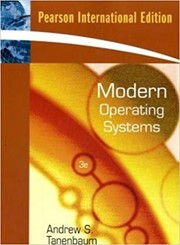 Modern Operating SystemsAndrew S. Tanenbaum, Herbert Bos · 1992
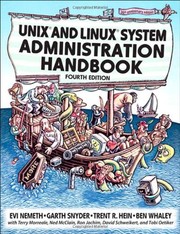 Unix System Administration HandbookEvi Nemeth, Garth Snyder · 1989
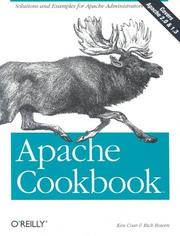 Apache CookbookKen Coar, Rich Bowen · 2003
 MacsPaul McFedries · 2008
 The UNIX operating systemChristian, Kaare, Kaare Christian · 1983
 A+ guide to managing and maintaining your PCAndrews, Jean · 2003
 Windows User's Guide to DOSCarolyn Z. Gillay, Bette A. Peat · 1998
Ranked by number of editions on Open Library, a rough measure of how lasting a book is.
🔗 Related topics
- NTLDR NTLDR (abbreviation of NT loader) is the boot loader for all releases of Windows NT from 1993 with the release of Windows NT 3.1 up until Windows XP and…
- EasyBCD EasyBCD is a program developed by NeoSmart Technologies to configure and tweak the Boot Configuration Data (BCD), a boot database first introduced in Windows…
- UEFI Unified Extensible Firmware Interface or UEFI is a specification for the firmware architecture of a computing platform. When a computer is powered on,…
- Boot sector A boot sector is the sector of a persistent data storage device (e.g., hard disk, floppy disk, optical disc, etc.) which contains machine code to be loaded…
- Multi-booting Multi-booting is the act of installing multiple operating systems on a single computer, and being able to choose which one to boot. The term dual-booting…
- EFI system partition The EFI (Extensible Firmware Interface) system partition or ESP is a partition on a data storage device (usually a hard disk drive or solid-state drive)…
- Volume boot record A volume boot record (VBR) (also known as a volume boot sector, a partition boot record or a partition boot sector) is a type of boot sector introduced…
- Master boot record A master boot record (MBR) is a type of boot sector in the first block of partitioned computer mass storage devices like fixed disks or removable drives…