Everything about Wilson loop
Gauge field loop operator
In quantum field theory, Wilson loops are gauge invariant operators arising from the parallel transport of gauge variables around closed loops. They encode all gauge information of the theory, allowing for the construction of loop representations which fully describe gauge theories in terms of these loops. In pure gauge theory they play the role of order operators for confinement, where they satisfy what is known as the area law. Originally formulated by Kenneth G. Wilson in 1974, they were used to construct links and plaquettes which are the fundamental parameters in lattice gauge theory. Wilson loops fall into the broader class of loop operators, with some other notable examples being 't Hooft loops, which are magnetic duals to Wilson loops, and Polyakov loops, which are the thermal version of Wilson loops. Wikipedia →
🧭 Start here: a 6-step reading path
- Read the overview: Wilson loopA 5-minute orientation
- Skim a recent paper: The massless three-loop Wilson coefficients for the deep-inelastic structure functions F2, FL, xF3 and g1Influential work since 2022
- Pick up a classic book: The C Programming LanguageThe most-reprinted book on the subject
- Read the landmark paper: Wilson Loops in Large N Field TheoriesCited 1,511 times
- Go sideways: Loop representation in gauge theories and quantum gravityA closely related topic
- Go sideways: 4D N = 1 supergravityA closely related topic
📖 Definitions
No dictionary entry for this exact phrase.
🗂️ The subject at a glance
🏆 Landmark papers (most cited)
Wilson Loops in Large N Field Theories
Hexagon Wilson loop = six-gluon MHV amplitude
Wilson loop in vacuum fields
The two-loop hexagon Wilson loop in $ \mathcal{N} = 4 $ SYM
Half-BPS Wilson loop and AdS2/CFT1
A formula for the Wilson loop
ABJ fractional brane from ABJM Wilson loop
Critical point behavior of the Wilson loop
🆕 Influential since 2022
The massless three-loop Wilson coefficients for the deep-inelastic structure functions F2, FL, xF3 and g1
Generalized Wilson loop method for nonlinear light-matter interaction
Wilson loop in general representation and RG flow in 1D defect QFT
Two-loop five-point two-mass planar integrals and double Lagrangian insertions in a Wilson loop
Pentagon Wilson loop with Lagrangian insertion at two loops in $$ \mathcal{N} $$ = 4 super Yang-Mills theory
📚 Books worth reading
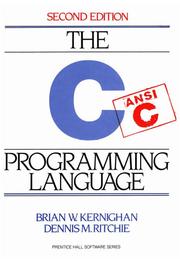 The C Programming LanguageBrian W. Kernighan, Dennis MacAlistair Ritchie · 1978
 Bulletin of the United States Army Medical DepartmentUnited States. Army Medical Service. · 1944
 The Conspirators HierarchyJohn Coleman · 1992
- 📕Wilson lines in quantum field theoryIgor Olegovich Cherednikov · 2014
 Integral systemsKaren K. Uhlenbeck · 1998
- 📕Scattering Amplitudes and Wilson Loops in Twistor SpaceMathew Richard Bullimore · 2013
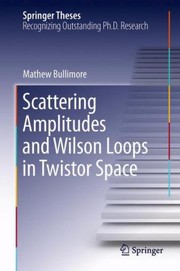 Scattering Amplitudes And Wilson Loops In Twistor SpaceMathew Richard · 2013
 Scattering Amplitudes and Wilson Loops in Twistor SpaceMathew Richard Richard Bullimore · 2016
Ranked by number of editions on Open Library, a rough measure of how lasting a book is.
🔗 Related topics
- Loop representation in gauge theories and quantum gravity Attempts have been made to describe gauge theories in terms of extended objects such as Wilson loops and holonomies. The loop representation is a quantum…
- 4D N = 1 supergravity In supersymmetry, 4D N = 1 {\displaystyle {\mathcal {N}}=1} supergravity is the theory of supergravity in four dimensions with a single supercharge. It…
- Type I supergravity In supersymmetry, type I supergravity is the theory of supergravity in ten dimensions with a single supercharge. It consists of a single supergravity multiplet…
- Bimetric gravity Bimetric gravity or bigravity refers to two different classes of theories. The first class of theories relies on modified mathematical theories of gravity…
- Staggered fermion In lattice field theory, staggered fermions (also known as Kogut–Susskind fermions) are a fermion discretization that reduces the number of fermion doublers…
- Eleven-dimensional supergravity In supersymmetry, eleven-dimensional supergravity is the theory of supergravity in the highest number of dimensions allowed for a supersymmetric theory…
- RNS formalism In string theory, the Ramond–Neveu–Schwarz (RNS) formalism is an approach to formulating superstrings in which the worldsheet has explicit superconformal…
- Hamiltonian constraint of LQG In the ADM formulation of general relativity one splits spacetime into spatial slices and time, the basic variables are taken to be the induced metric…