Everything about Visual masking
Phenomenon of visual perception

Visual masking is a phenomenon of visual perception. It occurs when the visibility of one image, called a target, is reduced by the presence of another image, called a mask. The target might be invisible or appear to have reduced contrast or lightness. There are three different timing arrangements for masking: forward masking, backward masking, and simultaneous masking. In forward masking, the mask precedes the target. In backward masking the mask follows the target. In simultaneous masking, the mask and target are shown together. There are two different spatial arrangements for masking: pattern masking and metacontrast. Pattern masking occurs when the target and mask locations overlap. Metacontrast masking occurs when the mask does not overlap with the target location. A further type, object substitution masking, occurs when a sparse mask, such as four small dots surrounding the target, appears with the target and remains on screen after the target disappears. It is thought to depend on re-entrant processing from higher visual areas rather than on contour interactions. Wikipedia →
🧭 Start here: a 6-step reading path
- Read the overview: Visual maskingA 5-minute orientation
- Skim a recent paper: Atypical visual field asymmetries in redundancy maskingInfluential work since 2022
- Pick up a classic book: Information-Processing Approaches to Visual PerceptionThe most-reprinted book on the subject
- Read the landmark paper: What’s new in visual masking?Cited 513 times
- Go sideways: MicrosaccadeA closely related topic
- Go sideways: Response primingA closely related topic
📖 Definitions
No dictionary entry for this exact phrase.
🏆 Landmark papers (most cited)
What’s new in visual masking?
Visual masking: Mechanisms and theories.
On Visual Masking (Metacontrast): Dichoptic Observation
Visual masking and visual integration across saccadic eye movements.
Visual attention modulates metacontrast masking
Temporal and Spatial Visual Masking I Masking by Impulse Flashes
The role of feedback in visual masking and visual processing
Remapped visual masking
🆕 Influential since 2022
Atypical visual field asymmetries in redundancy masking
Backward masking in mice requires visual cortex
A Novel Approach for Visual Speech Recognition Using the Partition-Time Masking and Swin Transformer 3D Convolutional Model
Masked-Piper: Masking personal identities in visual recordings while preserving multimodal information
Young children’s subjective and objective thresholds and emergent processes of visual consciousness using a backward masking task
📚 Books worth reading
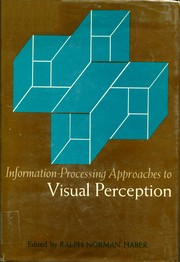 Information-Processing Approaches to Visual PerceptionRalph Norman Haber · 1969
- 📕Visual MaskingTalis Bachmann, Gregory Francis · 2013
- 📕Psikhofiziologii︠a︡ zritelʹnoĭ maskirovkiTalis Bachmann · 1989
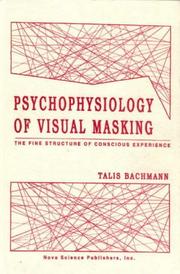 Psychophysiology of visual maskingT. Bakhman · 1994
- 📕Psikhofiziologii︠a︡ zritelʹnoĭ maskirovki
Ranked by number of editions on Open Library, a rough measure of how lasting a book is.
🔗 Related topics
- Microsaccade Microsaccades are a kind of fixational eye movement. They are small, jerk-like, involuntary eye movements, similar to miniature versions of voluntary saccades…
- Response priming In the psychology of perception and motor control, the term response priming denotes a special form of priming. Generally, priming effects take place whenever…
- Surround suppression Surround suppression is where the relative firing rate of a neuron may under certain conditions decrease when a particular stimulus is enlarged. It has…
- Binocular Switch Suppression Binocular switch suppression (BSS) is a technique to suppress usually salient images from an individual's awareness, a type of experimental manipulation…
- Stephen Macknik Stephen Louis Macknik (/ˈmæknɪk/ MAK-nik; born August 9, 1968) is an American neuroscientist and science writer. He is a Professor of Ophthalmology, Neurology…
- Visual processing abnormalities in schizophrenia Visual processing abnormalities in schizophrenia are commonly found, and contribute to poor social function. There is evidence that schizophrenia affects…
- Filling-in In vision, filling-in phenomena are those responsible for the completion of missing information across the physiological blind spot, and across natural…
- Backward masking In psychology and neuroscience, backward masking is a phenomenon of human perception in which a briefly presented stimulus (the "target") becomes difficult…